
Catastrophic Failure Risk
Dual orthogonal X-Y proximity probes detect internal shaft rub within 2 milliseconds.
The definitive engineering standard governing non-contact eddy-current proximity probes, casing seismic accelerometers, bearing temperature RTDs, and 2oo3 shutdown logic.
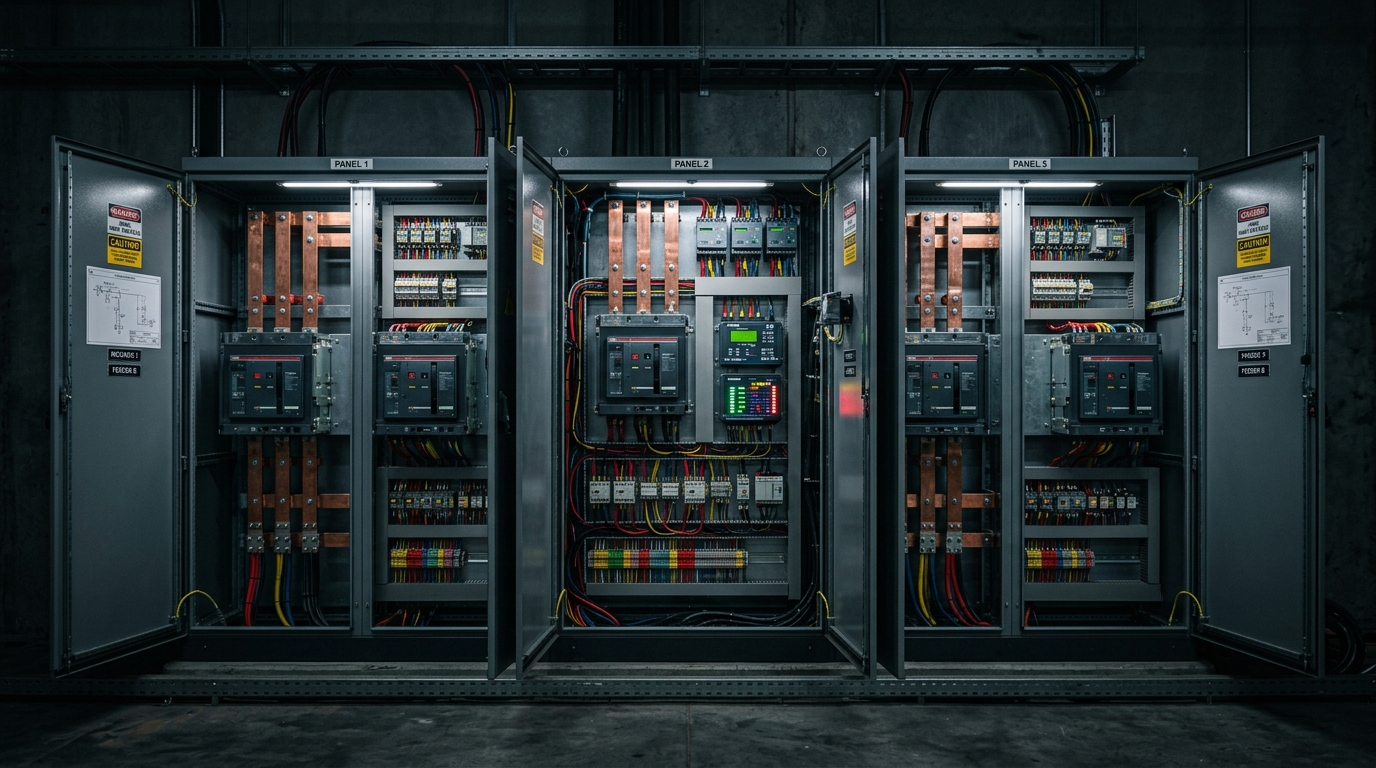
A catastrophic turbomachinery failure—such as an uncontained cracked gas compressor rotor burst—costs in excess of $15,000,000 in capital replacement, environmental cleanup, and weeks of lost plant production. Conversely, a spurious false trip on a petrochemical train costs $250,000+ per occurrence. API 670 establishes strict rules for probe placement, gap calibration, and 2oo3 voting trip logic that preserve plant safety without sacrificing production availability.
Dual orthogonal X-Y proximity probes detect internal shaft rub within 2 milliseconds.
Two-out-of-three (2oo3) voting logic prevents single-transducer false shutdowns.
Continuous DC gap voltage monitoring tracks hydrodynamic oil clearance loss in real time.
Defines 2-out-of-3 (2oo3) voting logic to eliminate spurious false trips while guaranteeing emergency trip execution in under 100 milliseconds.
Two non-contact eddy-current proximity probes mounted 90° apart on each bearing journal.
Mounted 45° from the true vertical centerline of the bearing housing.
Sensitivity: 7.87 mV/µm (200 mV/mil) ±5% over a linear range of 2.0 mm (80 mils).
Target track electrical and mechanical runout must not exceed 6 µm (0.25 mil) peak-to-peak.
Two independent proximity probes viewing the thrust collar directly.
Configured in 2oo2 or 2oo3 voting shutdown logic to prevent impeller axial rub against casing.
Independent power supplies and galvanically isolated signal conditioners.
Duplex Pt100 3-wire RTDs or Type J/K thermocouples embedded in babbitt lining.
Located at point of maximum hydrodynamic fluid-film pressure (typically 30° past bottom dead center).
Hermetically sealed spring-loaded tips maintaining positive physical contact.
The rigorous framework for ranking every plant asset across Safety, Environmental, Production, and Capital consequence dimensions to drive work order SLAs and storeroom stocking.
Four phased milestones to achieve 100% compliance with zero disruption to daily plant operations.
Verify mechanical surface finish (<0.4 µm Ra) and burnish residual magnetic flux below 1.5 Gauss.
Set mechanical gap to midpoint of linear range (typically -10.0 VDC gap voltage at ambient rest).
Perform end-to-end trip loop signal injection tests from probe driver terminal to turbine trip solenoid.
Tap rack buffered BNC ports to feed Optruss continuous 102.4 kS/s high-frequency DSP acquisition.
Optruss Edge Hub integrates seamlessly with API 670 protection racks (Bently Nevada 3500, Emerson AMS, Yokogawa) via isolated high-impedance buffered taps (>10 MΩ). This architecture captures raw dynamic micro-transients and reconstructed shaft orbit profiles without touching SIL-3 safety loops or risking accidental plant shutdown.
The global industrial benchmark for equipment taxonomies, failure mechanisms, and boundary definitions in petroleum, natural gas, and petrochemical facilities.
The gold standard 7-step process for determining the exact proactive maintenance policies required to ensure any physical asset continues to fulfill its design function.
Eliminate dirty CMMS data and manual spreadsheet tracking. Optruss AssetCore implements authoritative standard schemas natively.