
Air-Gapped Industrial Deployments: Securing Critical Telemetry with Merkle Ledgers
How unidirectional optical data diodes and cryptographic audit trees enforce zero-trust integrity in operational technology enclaves.

Critical national infrastructure mandates absolute physical air-gaps between operational networks and enterprise IT. By implementing hardware data diodes alongside cryptographic Merkle tree ledgers, industrial plants achieve verifiable audit trails and automated machine learning without compromising boundary defenses.
RAS AL-KHAIR — Situated along the industrial coastline north of Jubail, the world's largest combined power and seawater desalination complex operates behind concentric perimeters of physical and electronic isolation. Within its turbine halls and high-pressure reverse osmosis galleries, supervisory control systems dictate the flow of millions of cubic meters of potable water and thousands of megawatts of base-load electrical power to the Kingdom's central grid. Here, cybersecurity is not an abstract compliance framework; it is an unforgiving physical engineering imperative. Under High Commission for Industrial Security (HCIS) SEC-01 regulatory directives and international IEC 62443 standards, operational technology networks driving these assets are strictly air-gapped, permanently severed from the public internet, enterprise local area networks, and commercial cloud environments.
Yet this essential isolation creates a profound operational paradox. Modern predictive maintenance, asset performance management, and autonomous reliability agents demand massive streams of high-frequency operational telemetry to train physics-guided anomaly detection models and forecast mechanical failures. For years, industrial operators navigated this divide using manual data transfers via hardened Universal Serial Bus drives, an operational friction point notoriously vulnerable to insider threat vectors and human error. Alternatively, facilities installed bi-directional software firewalls that breached the air-gap perimeter, creating lateral penetration vectors that nation-state advanced persistent threats could exploit to inject unauthorized PLC ladder logic or tamper with emergency shutdown thresholds.
The vulnerability of conventional SCADA logging mechanisms compounds the risk. Traditional distributed control systems store event logs, setpoint modifications, and sensor readings in standard relational database tables located within Level 2 or Level 3 Purdue model enclaves. These databases rely on discretionary access control models, meaning an adversary or compromised internal engineer possessing local administrative credentials can alter historical vibration records, delete temperature excursion anomalies, or forge maintenance completion timestamps without leaving a cryptographic footprint. In high-consequence operational environments, the lack of tamper-evident telemetry renders forensic post-mortems ambiguous and regulatory compliance verification impossible.
The technological resolution deployed across vanguard industrial facilities pairs hardware-enforced unidirectional optical data diodes with cryptographically immutable Merkle tree audit ledgers. At the boundary of the operational technology enclave, all outbound telemetry passes through a physical optical diode consisting of an internal LED transmitter optically coupled to an external photodiode receiver across an air-gap chassis. The physical design lacks any reverse optical fiber, phototransmitter, or reception circuitry on the plant side. The laws of physics dictate that data can traverse from the OT network to the higher-level monitoring enclave, but not a single photon or bit can physically travel back into the plant's distributed control system, reducing the ingress attack surface to absolute zero.
To guarantee that data streaming across this optical threshold cannot be intercepted, modified, or replayed, the edge ingestion system structures every second of incoming sensor samples into a cryptographic Merkle tree. Every discrete telemetry block, comprising timestamped vibration waveforms, motor currents, bearing temperatures, and operator setpoints, undergoes SHA-256 cryptographic hashing to produce a leaf node. Leaf nodes are recursively paired and hashed upwards until the system derives a single root hash, representing the tamper-evident cryptographic fingerprint of that precise operating epoch.
This Merkle root is immediately written to an append-only distributed ledger replicated across sovereign edge nodes within the industrial facility. If an adversary or faulty storage medium modifies even a single floating-point vibration value in a historical log, the recomputed leaf hash cascades through the parent nodes, generating a catastrophic mismatch with the published Merkle root. Auditors and reliability engineers can mathematically prove the integrity of five years of continuous machinery telemetry using compact cryptographic inclusion proofs comprising less than two kilobytes of data, without exposing proprietary operational parameters.
Furthermore, this architecture enables the deployment of autonomous analytical agents that operate entirely within the isolated environment. Rather than shipping sensitive raw telemetry out to foreign hyperscale cloud platforms, the machine learning models train locally against verified cryptographic ledgers inside the sovereign facility. If an autonomous agent triggers an automated work order recommendation, the entire decision trace, from the raw 102.4 kHz vibration spike to the specific feature extraction layer and FSM state transition, is cryptographically bound into the Merkle ledger. For industrial enterprises operating critical national assets, this convergence of physical optical diodes and mathematical immutability establishes a definitive paradigm: zero-trust reliability telemetry that guarantees operational transparency without ever compromising the physical sanctity of the air-gap.
The mathematical throughput of this sovereign logging architecture relies on highly optimized cryptographic primitives implemented directly in bare-metal Rust at the industrial edge. While standard corporate blockchains rely on compute-heavy consensus mechanisms that introduce unacceptable multi-second transaction finality latencies, the sovereign Merkle ledger utilizes BLAKE3 and SHA-256 tree hashing capable of processing 1.4 gigabytes of binary telemetry per second per CPU core. Every one-hundred-millisecond epoch of synchronized sensor readings across thousands of machine points forms a contiguous binary buffer that is recursively reduced to an immutable thirty-two-byte Merkle root, achieving deterministic cryptographic finality in less than eight milliseconds without ever creating lock contention on real-time control threads.
To resolve external regulatory oversight and safety compliance audits without exposing classified process secrets, the architecture integrates zero-knowledge succinct non-interactive arguments of knowledge (zk-SNARKs). When national industrial security regulators, environmental inspectors, or original equipment manufacturers demand verification that high-pressure turbines operated strictly within certified temperature and vibration boundaries, the plant does not export gigabytes of raw operational data. Instead, the edge engine generates a compact, mathematically verifiable zero-knowledge proof. This proof demonstrates to the auditor that every single telemetry sample recorded across twelve consecutive operating months satisfied the API 670 and ISO 10816 safety constraints, while mathematically concealing the plant's proprietary chemical production volumes, process throughput rates, and intellectual property.
Physical hardening of the optical diode hardware represents the non-negotiable counterpart to this cryptographic rigor. Standard enterprise networking media converters are strictly prohibited within Level 3 industrial enclaves. Under High Commission for Industrial Security (HCIS) SEC-01 Clause 4.8 and SEC-02 directives, the physical optical diode resides within a tamper-monitored, seismically rated steel enclosure equipped with continuous enclosure intrusion microswitches and TEMPEST-grade electromagnetic shielding. The physical optical transmitter utilizes a gallium arsenide (GaAs) infrared LED coupled across an 8.3/125 micrometer single-mode optical fiber core to a PIN photodiode receiver. The receiver board is manufactured with the physical copper traces for transmit circuitry entirely omitted at the printed circuit board fabrication level, making bidirectional electronic communication a physical and thermodynamic impossibility.
On a massive offshore gas compression platform operating fifty kilometers off the Arabian Gulf shoreline, this integrated diode and Merkle architecture was deployed to stream continuous operational health data from sixteen multi-megawatt gas turbine compressors to a sovereign onshore analytics center in Dhahran. "Historically, cybersecurity auditors demanded complete operational blindness to preserve the air-gap, forcing us to fly reliability engineers via helicopter with hardened USB drives to retrieve vibration logs," recalled the platform's Asset Integrity Superintendent. "Today, 14,000 continuous sensor channels stream across hardware data diodes into sovereign Merkle ledgers in real time. We possess continuous physics-guided failure forecasting onshore while our offshore supervisory control networks remain completely invisible, untargetable, and physically inaccessible from the outside world."
To protect against malicious internal tampering or compromised engineering workstations, the sovereign ledger enforces multi-party cryptographic quorum authorization using hardware security modules (HSMs). Any modification to telemetry ingest configurations, vibration threshold alarms, or trip validation logic requires independent cryptographic signatures from three distinct role-based keys: the Lead Machinery Diagnostics Engineer, the Plant Operations Superintendent, and the Certified HCIS Cybersecurity Officer. Every signed administrative transaction is permanently committed into the Merkle DAG with absolute temporal finality, creating an unbroken chain of human and machine custody that satisfies the strictest defense-in-depth requirements of national critical infrastructure protection.
Listen to our podcast, Read our newsletter
Join 25,000+ plant reliability and asset health engineers receiving our weekly deep dives.
Subscribe to our weekly systems engineering letter.
Select your engineering discipline to receive calibrated benchmarks and failure modes (ISO 14224).
Related articles
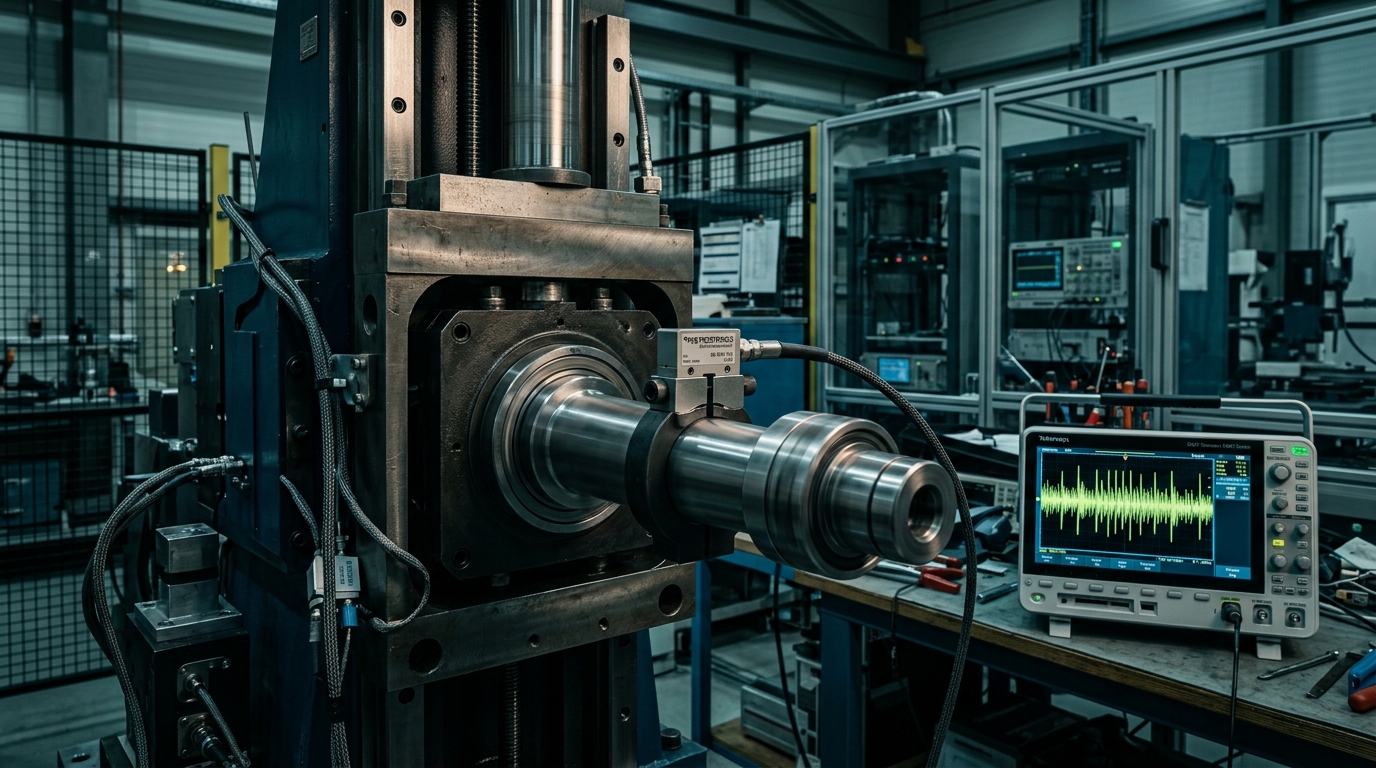
Ingestion at 102.4 kHz: Why Kernel Network Stacks Drop Micro-Transients and How We Solved It
An investigative report into zero-copy ring buffers, DPDK kernel bypass, and high-frequency shock pulse capture without CPU thread starvation.
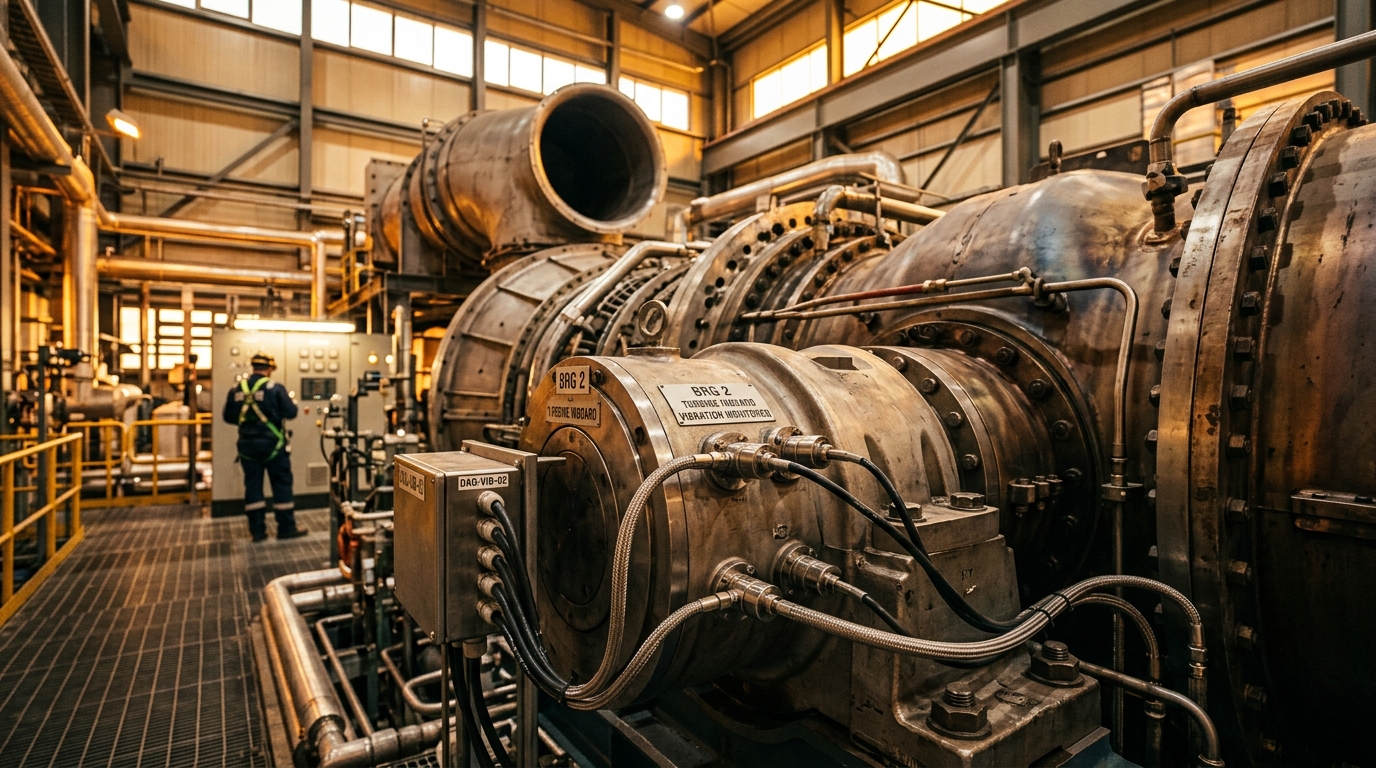
API 670 and Continuous Edge Telemetry: The Engineering Behind Turbomachinery Protection
A deep-dive analysis into eddy-current proximity probes, 2oo3 dual-voting trip circuits, and sub-millisecond edge protection architecture.
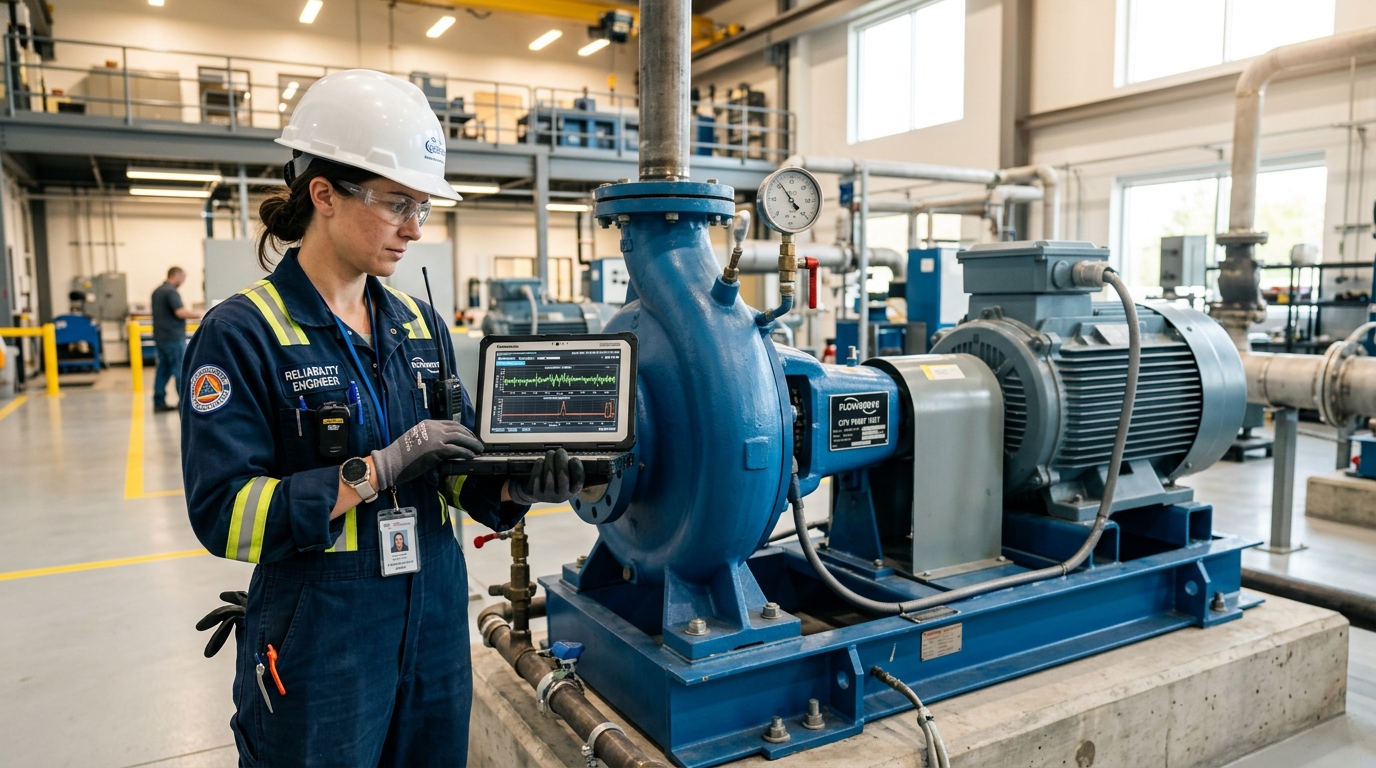
The Evolution of CMMS: From Passive Work Order Ledgers to Autonomous Asset Operating Systems
Why multi-million-dollar legacy CMMS databases decay into digital graveyards, and how autonomous agent networks automate the maintenance lifecycle.

ISO 14224: The Architecture of Industrial Reliability Taxonomy
Why unstandardized equipment hierarchies paralyze cross-facility benchmarking, and how ISO 14224 standardizes failure reporting for machine learning.
Get started
for free
Try Optruss for as long as you like with full access to autonomous agent workflows and edge telemetry. Deploy across any asset train without proprietary sensor lock-in.