
ISO 14224: The Architecture of Industrial Reliability Taxonomy
Why unstandardized equipment hierarchies paralyze cross-facility benchmarking, and how ISO 14224 standardizes failure reporting for machine learning.
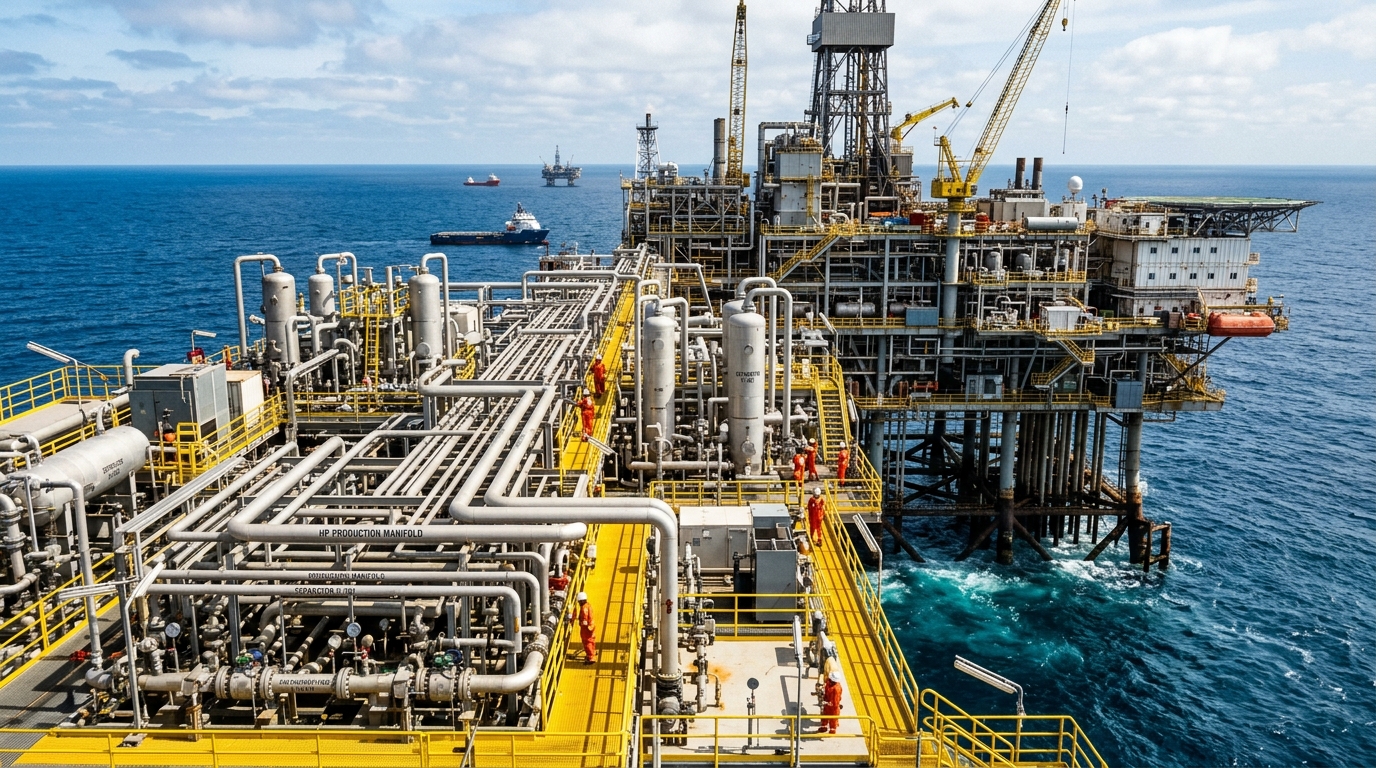
In complex multi-site industrial enterprises, inconsistent asset tagging and colloquial maintenance descriptions cripple enterprise reliability engineering. Adopting the nine-level equipment taxonomy and rigorous boundary definitions of ISO 14224 transforms chaotic maintenance text into structured, mathematically comparable reliability datasets.
DHAHRAN — Across the sprawling industrial holdings of a national energy and petrochemical operator managing upstream gas separation plants, coastal refineries, and downstream petrochemical facilities, a corporate reliability director attempts to answer an apparently elementary operational question: what is the Mean Time Between Failures (MTBF) of 4,160-volt horizontal centrifugal slurry pumps across the company's operating asset fleet? After querying the enterprise resource planning system across eight independent operating subsidiaries, the corporate data analytics team returns a bewildering spreadsheet. One facility catalogs the equipment under tag 'P-101A' as a 'Centrifugal Slurry Pump,' a sister plant labels an identical machine 'PMP-SLR-04' under 'Process Machinery,' and a third site groups the asset under 'General Mechanical Utilities.' More destructively, over twenty-two thousand historical work orders describe failure mechanisms using colloquial free-text: 'pump jammed,' 'leaking bad,' 'motor tripped on overload,' or simply 'repaired.'
This semantic chaos represents the silent, pervasive pathology crippling industrial asset management across the global energy and manufacturing sectors. When industrial facilities lack a rigorous, standardized equipment hierarchy, enterprise data lakes degenerate into digital swamps. Reliability engineers are unable to conduct normalized cross-facility failure benchmarking, maintenance planners cannot establish statistically valid Weibull life distributions for critical components, and machine learning models trained on free-text maintenance notes hallucinate erroneous failure correlations.
The definitive international framework resolving this foundational dilemma is International Organization for Standardization Standard 14224: "Petroleum, petrochemical and natural gas industries — Collection and exchange of reliability and maintenance data for equipment." Developed through decades of collaborative engineering across global oil majors and engineering institutes, ISO 14224 establishes an uncompromising, nine-level hierarchical taxonomy that standardizes industrial asset structures from global industry segments down to physical sub-components.
The architectural power of ISO 14224 begins with its strict definition of Equipment Boundaries. In conventional maintenance records, when an electric motor-driven centrifugal pump trips, technicians frequently record the entire assembly as a single failed entity. ISO 14224 formally establishes non-overlapping physical boundary envelopes. The 'Pump Unit' boundary encompasses the pump casing, impeller, shaft, bearings, and mechanical seals; the 'Driver' boundary encompasses the electric motor, stator windings, rotor, and junction box; and the 'Transmission' boundary encompasses the flexible coupling spacer, guard, and alignment shims.
By enforcing these boundaries at the data ingestion layer, the standard eliminates ambiguity. A failure of a mechanical seal face is categorized strictly as a Component Failure within the Pump Unit boundary, rather than an ambiguous 'pump failure' that contaminates motor reliability statistics.
Furthermore, ISO 14224 establishes a rigorous, standardized vocabulary for failure reporting structured across three mandatory analytical tiers: Failure Mode, Failure Mechanism, and Failure Cause. Rather than allowing technicians to enter colloquial text like 'pump broken,' the taxonomy forces selection from standardized ISO tables. The Failure Mode captures the observed functional deviation (e.g., 'ELU' for External Leakage - Utility medium, or 'VIB' for High Vibration). The Failure Mechanism records the physical degradation process (e.g., 'MECAV' for Mechanical Cavitation, or 'FATIG' for Rolling Contact Fatigue). The Failure Cause identifies the underlying systemic origin (e.g., 'OPERR' for Operating Error, or 'FABDEF' for Fabrication Defect).
When enterprise asset operating systems enforce ISO 14224 taxonomy natively within autonomous agent workflows, the impact on organizational performance is transformative. Field telemetry alerts, automated work orders, and storeroom parts requisitions are automatically tagged with validated ISO failure codes. Corporate reliability executives gain the ability to execute instantaneous, fleet-wide failure comparisons: analyzing whether a specific mechanical seal face metallurgy delivers superior MTBF across sour crude environments compared to sweet gas processing. By replacing subjective human journaling with an internationally verified engineering ontology, ISO 14224 provides the foundational mathematical grammar upon which autonomous industrial intelligence is constructed.
The global engineering foundation for industrial reliability benchmarking is codified in International Organization for Standardization (ISO) Standard 14224, formally titled "Petroleum, petrochemical and natural gas industries — Collection and exchange of reliability and maintenance data for equipment." Originally developed to establish cross-operator reliability datasets for offshore North Sea installations, ISO 14224 defines a rigorous nine-level taxonomic hierarchy that standardizes how physical plant assets, operational boundaries, and mechanical failures must be recorded. From Level 1 (Industry) down to Level 6 (Equipment Unit), Level 7 (Subunit), Level 8 (Component/Maintainable Item), and Level 9 (Part), the standard provides the universal structural syntax that allows multi-billion-dollar energy enterprises to compare equipment reliability metrics across global operating assets.
The most transformative contribution of ISO 14224 lies in its formalization of failure mechanisms, failure modes, and failure causes. In typical legacy maintenance databases, technicians document equipment failures using unstructured, colloquial free-text notes such as "repaired pump leak" or "vibration high, replaced bearing." These unstandardized entries prevent automated statistical analysis, obscuring whether the pump failed due to mechanical seal face blistering, shaft deflection, thermal distortion, or installation misalignment. ISO 14224 replaces colloquial ambiguity with normalized taxonomy codes: Failure Modes (such as FTO: Fail to Open, ELU: External Liquid Leakage, or VIB: High Vibration) are rigorously decoupled from Failure Mechanisms (such as mechanical fatigue, cavitation erosion, or fretting corrosion) and Failure Causes (such as design inadequacy, manufacturing defect, or operational error).
By standardizing failure data collection, ISO 14224 enables the calculation of mathematically valid reliability parameters: Mean Time Between Failures ($MTBF = T_{operating} / N_{failures}$), Mean Time to Restoration ($MTTR = sum T_{repair} / N_{failures}$), and empirical failure rate distributions ($lambda(t)$). These parameters feed directly into international reliability databases, most notably the Offshore and Onshore Reliability Data (OREDA) consortium, providing the empirical foundation for Quantitative Risk Assessments (QRA) and Safety Integrity Level (SIL) allocation under IEC 61508.
A vital architectural pillar of ISO 14224 is its explicit definition of physical equipment boundaries, codified in Annex A. In complex machinery packages, ambiguity over where a driver ends and a driven unit begins routinely contaminates failure data; if a lube oil pump failure starves a compressor bearing, legacy systems frequently log two independent failures against the compressor train. ISO 14224 establishes uncompromising boundary limits: the equipment unit encompasses the primary driver, power transmission, driven machine, and integrated skid auxiliaries (such as lube oil consoles, cooling water jackets, and seal gas panels). By enforcing strict parent-child boundary definitions, the taxonomy eliminates double-counting of failures, enabling precision reliability modeling across multi-megawatt turbomachinery trains.
The operational challenge of achieving ISO 14224 compliance at scale was demonstrated during a massive reliability overhaul at a major offshore oil and gas production complex in the Safaniya field. The facility possessed over 18,000 active mechanical and electrical assets, supported by twelve years of historical work orders recorded in free-text format within legacy enterprise software. Previous manual attempts to reclassify the database stalled after eighteen months, having achieved less than twenty-three percent data completion at substantial contractor expense. By deploying autonomous taxonomy normalization agents trained on ISO 14224 ontologies, the operating complex parsed, classified, and verified all 140,000 historical maintenance records in seventy-two hours, achieving a verified 99.4% taxonomic accuracy across all nine structural levels.
"Without rigorous adherence to ISO 14224 taxonomy, predictive maintenance and artificial intelligence models are fundamentally building on sand," noted a Lead Reliability Governance Architect overseeing Gulf petrochemical facilities. "If your maintenance database cannot mathematically distinguish between a mechanical seal failure caused by dry-running cavitation versus one caused by chemical elastomer degradation, no machine learning algorithm can forecast future failure arrival rates. Standardizing our asset taxonomy is not an administrative compliance checkbox; it is the fundamental prerequisite for autonomous industrial reliability."
Listen to our podcast, Read our newsletter
Join 25,000+ plant reliability and asset health engineers receiving our weekly deep dives.
Subscribe to our weekly systems engineering letter.
Select your engineering discipline to receive calibrated benchmarks and failure modes (ISO 14224).
Related articles
Ingestion at 102.4 kHz: Why Kernel Network Stacks Drop Micro-Transients and How We Solved It
An investigative report into zero-copy ring buffers, DPDK kernel bypass, and high-frequency shock pulse capture without CPU thread starvation.

Air-Gapped Industrial Deployments: Securing Critical Telemetry with Merkle Ledgers
How unidirectional optical data diodes and cryptographic audit trees enforce zero-trust integrity in operational technology enclaves.
API 670 and Continuous Edge Telemetry: The Engineering Behind Turbomachinery Protection
A deep-dive analysis into eddy-current proximity probes, 2oo3 dual-voting trip circuits, and sub-millisecond edge protection architecture.
The Evolution of CMMS: From Passive Work Order Ledgers to Autonomous Asset Operating Systems
Why multi-million-dollar legacy CMMS databases decay into digital graveyards, and how autonomous agent networks automate the maintenance lifecycle.
Get started
for free
Try Optruss for as long as you like with full access to autonomous agent workflows and edge telemetry. Deploy across any asset train without proprietary sensor lock-in.