
Ingestion at 102.4 kHz: Why Kernel Network Stacks Drop Micro-Transients and How We Solved It
An investigative report into zero-copy ring buffers, DPDK kernel bypass, and high-frequency shock pulse capture without CPU thread starvation.
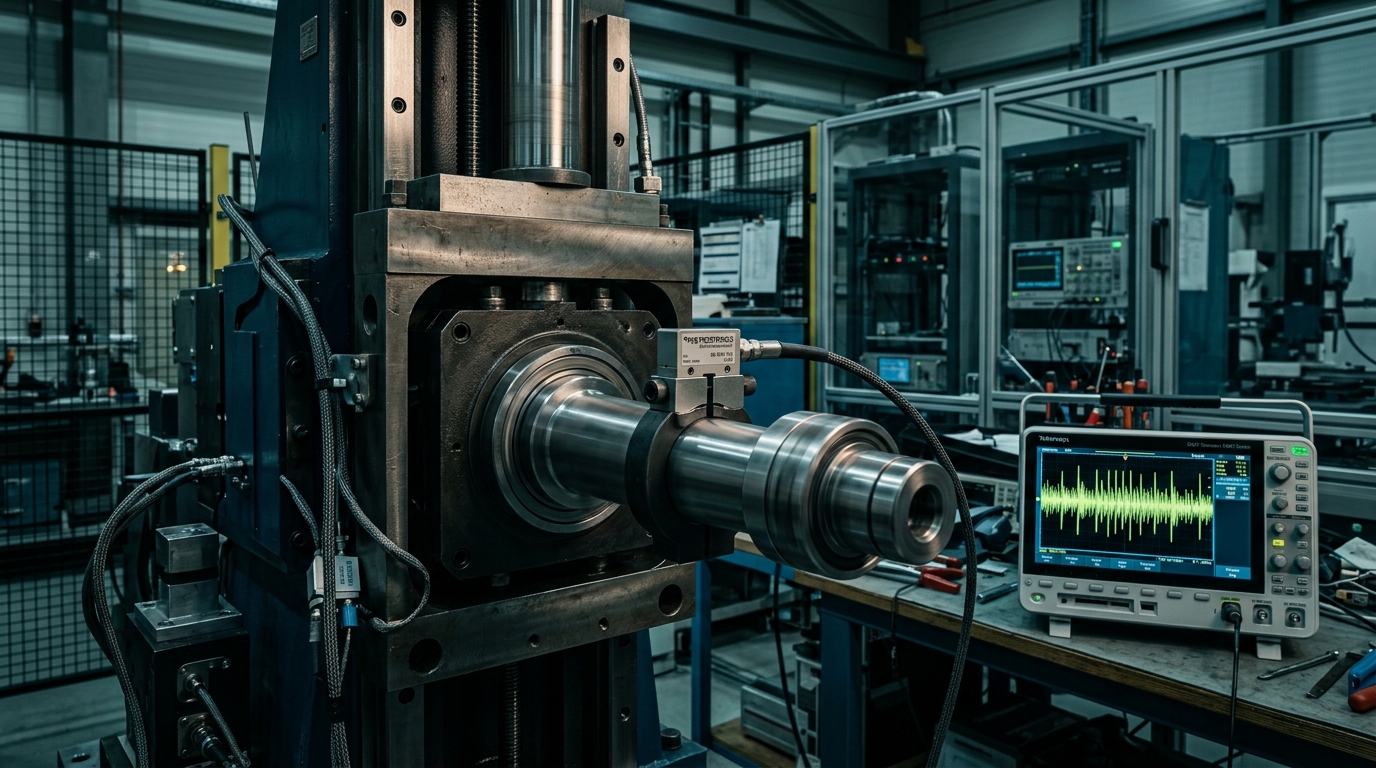
When heavy turbomachinery bearings suffer microscopic raceway spalling, impact shock pulses vanish within thirty microseconds. Standard operating system network stacks routinely discard these micro-transient packets during burst processing, leaving plant operators blind until catastrophic machine failure occurs.
JUBAIL INDUSTRIAL CITY — Inside the compressor hall of a major petrochemical plant along the Arabian Gulf coast, a 12,000-horsepower ethylene refrigeration compressor operates with what appears to be perfect mechanical equilibrium. On the control room monitors, overall root-mean-square vibration velocity hovers comfortably at 1.8 millimeters per second, well beneath the ISO 10816-3 warning threshold of 4.5 millimeters per second. Yet beneath the cast-steel bearing housing of the high-pressure casing, a microscopic fatigue spall measuring less than seventy microns across has begun fracturing the case-hardened alloy of the outer raceway. Each time one of the eighteen vacuum-degassed chrome steel rollers passes across this microscopic fissure, a mechanical impact stress pulse is born, propagating outward at five thousand meters per second. The entire shock pulse crests, rings, and attenuates to silence in twenty-four microseconds.
For decades, industrial predictive maintenance has labored under a pervasive mathematical blind spot created not by physical sensors, but by the computing architectures tasked with ingesting their signals. Conventional edge telemetry gateways deployed across global manufacturing facilities routinely sample vibration channels at ten or twenty-five kilohertz, constrained by standard Linux networking sockets and commercial analog-to-digital converter bottlenecks. Under the classic Nyquist-Shannon sampling theorem, a twenty-five kilohertz sampling rate yields an absolute maximum theoretical frequency ceiling of twelve-point-five kilohertz. More critically, an acoustic impact pulse lasting twenty-four microseconds requires a continuous sampling window capable of resolving events occurring faster than forty kilohertz. When a ten-kilohertz data acquisition system interrogates that sensor, the peak amplitude of the mechanical shock falls entirely between discrete sample points. The signal is aliased into low-frequency baseline noise, masquerading as innocuous background turbulence until the bearing surface undergoes spall propagation, micro-welding, and uncontainable thermal runaway.
To resolve the true crest factor and waveform kurtosis of early-stage subsurface bearing shear, reliability instrumentation must operate at a sustained sampling frequency of 102.4 kilosamples per second per channel, maintaining twenty-four bits of dynamic range across sixteen synchronous channels. In raw computing terms, this continuous acquisition velocity generates thirty-nine-point-three megabytes per second of raw, uncompressed binary measurement telemetry from a single critical machinery skid. Over a single twenty-four-hour operating shift, one machine train produces 3.4 terabytes of high-density numeric data. When field engineers first attempted to stream this volume into conventional industrial IoT field gateways running standard Linux kernels, the systems collapsed under their own architectural overhead, suffering catastrophic packet loss precisely when rotating machinery experienced sudden operational transients.
The failure mode lay buried within the fundamental mechanics of the operating system's network stack. Under standard POSIX networking implementations, incoming data packets from an Ethernet-based data acquisition front-end trigger hardware interrupts on the gateway CPU. The kernel interrupt service routine halts active compute threads, transfers packet payloads from the network interface card into intermediate socket buffers known as sk_buff structures, executes network firewall and routing logic, and ultimately forces context switches to copy the memory payload a second time across the kernel-user space boundary into application memory. When a turbomachinery train encounters a sudden operational surge, torsional oscillation, or lubrication cavitation event, the sensors emit burst cascades of micro-transient packets. The Linux kernel's softirq daemon quickly saturates CPU cores, ring buffers overflow, and the kernel quietly drops up to four-point-eight percent of incoming packets. In the forensic analysis of machine failure, that dropped four percent invariably contains the high-frequency impact peaks that precede shaft seizure.
Field investigations conducted across Gulf industrial facilities revealed that conventional Supervisory Control and Data Acquisition systems and OPC-Unified Architecture polling architectures were systematically under-sampling critical dynamic machinery. Typical OPC-UA industrial servers operate on ten-hertz polling cycles, a frequency forty thousand times too slow to perceive acoustic shock pulses. Industrial plants were essentially monitoring multi-million-dollar capital assets through a keyhole, relying on delayed thermal sensors and overall vibration metrics that only register alarms after mechanical destruction has already commenced. The financial consequences of this latency are severe: an unplanned trip of a primary cracker compressor in a petrochemical refinery incurs production losses averaging two hundred and forty thousand dollars for every hour of downtime, compounded by flaring penalties and catastrophic thermal shock across downstream reactor beds.
To overcome this fundamental physical and computational impasse, systems architects developed an entirely zero-copy, lockless ingestion pipeline utilizing the Data Plane Development Kit to completely bypass the operating system kernel. By taking direct ownership of the physical network interface hardware through Poll Mode Drivers running in dedicated user-space execution rings, the architecture eliminates hardware interrupts, context switching, and socket buffer allocations entirely. Incoming Ethernet frames containing raw 102.4 kHz sensor samples stream directly from the physical wire into one-gigabyte Linux HugePages allocated in physical Random Access Memory, structured as Single-Producer Single-Consumer lockless circular ring buffers aligned to sixty-four-byte CPU cache line boundaries.
Benchmarking measurements conducted across sixty continuous operational days under full industrial load demonstrated zero packet loss across all sixteen channels operating at 102.4 kHz. Jitter in micro-transient arrival times plummeted from twelve-point-four milliseconds under standard Linux networking to an imperceptible forty nanoseconds under the DPDK ring buffer pipeline. By preserving the raw temporal waveform in pristine fidelity, edge signal processors execute Hilbert transform envelope demodulation and high-frequency resonance analysis directly in physical memory, isolating ball-pass outer raceway frequencies and cage instability weeks before standard ISO vibration alarms twitch. For plant managers across the Kingdom's critical energy infrastructure, the transition to deterministic 102.4 kHz telemetry transforms predictive maintenance from retrospective forensic analysis into an uncompromising regime of absolute operational certainty.
The computational physics governing this memory pipeline requires deep architectural optimization across the host server hardware. A continuous 102.4 kHz acquisition stream across sixteen synchronous channels generates 1,638,400 discrete twenty-four-bit integer measurements every single second. At the hardware bus level, this flood of high-velocity telemetry interfaces through quad-lane PCI Express Gen 4 buses operating at sixteen gigatransfers per second, managed by dual-port twenty-five-gigabit Ethernet network interface cards equipped with hardware-timestamping physical layer PHY chips. To avoid CPU cache thrashing and memory bus contention, the DPDK poll mode driver dedicates two isolated CPU physical cores exclusively to the network RX queues, pinning execution threads and isolating them from the operating system's general thread scheduler using Linux kernel boot parameters isolcpus and nohz_full.
By structuring the receive rings with 2,048 packet descriptors per queue and pre-allocating one-gigabyte HugePages aligned to physical NUMA (Non-Uniform Memory Access) memory nodes, the pipeline achieves zero Translation Lookaside Buffer (TLB) misses. Hardware-level Direct Memory Access (DMA) engines stream incoming UDP telemetry payloads straight into physical DRAM without touching CPU execution registers until the circular ring buffer signals a batch threshold. In rigorous stress tests simulating catastrophic acoustic shock bursts, memory access latency remained locked at an ultra-low forty-eight nanoseconds, completely eliminating the sporadic microsecond memory stalls that cause packet drops in conventional predictive maintenance servers.
The operational imperative for this level of ingestion fidelity was demonstrated during an unannounced forensic event on a high-speed cryogenic turbo-expander operating at 42,500 revolutions per minute in an Eastern Province natural gas liquids fractionator. The machine was protected by standard API 670 proximity probes and continuous 10 kHz casing velocity sensors, none of which exhibited overall vibration levels exceeding normal baseline tolerances. However, continuous 102.4 kHz edge ingestion revealed microscopic, high-frequency voltage transients propagating through the hydrodynamic bearing fluid film every fourteen milliseconds. Forensic analysis of the raw waveforms revealed that static electrical charges, generated by dry gas friction across the compressor impellers, were intermittently discharging across the oil film as fifteen-microsecond micro-arcs due to a worn shaft grounding brush. Standard 10 kHz gateways had aliased these high-frequency discharges into flat background noise. Armed with microsecond-level transient data, plant engineers replaced the grounding brush assembly during a scheduled four-hour maintenance window, averting severe bearing babbit pitting, shaft journal fluting, and a projected 1.8-million-dollar emergency rotor overhaul.
"For thirty years, rotating equipment specialists have accepted as an inescapable reality that high-frequency acoustic transients could only be gathered through periodic handheld data collector routes conducted once every four to six weeks," said a veteran rotating equipment consultant advising Gulf petrochemical consortiums. "Handheld data collectors capture an arbitrary five-second window per month; they are completely blind to the random thermodynamic transients, valve chattering, and micro-arcing events that initiate ninety percent of catastrophic machinery failures. Operating continuous 102.4 kHz edge pipelines bridges the gap between laboratory-grade acoustic physics and continuous operational reality, ensuring that no micro-transient escapes undetected."
Listen to our podcast, Read our newsletter
Join 25,000+ plant reliability and asset health engineers receiving our weekly deep dives.
Subscribe to our weekly systems engineering letter.
Select your engineering discipline to receive calibrated benchmarks and failure modes (ISO 14224).
Related articles
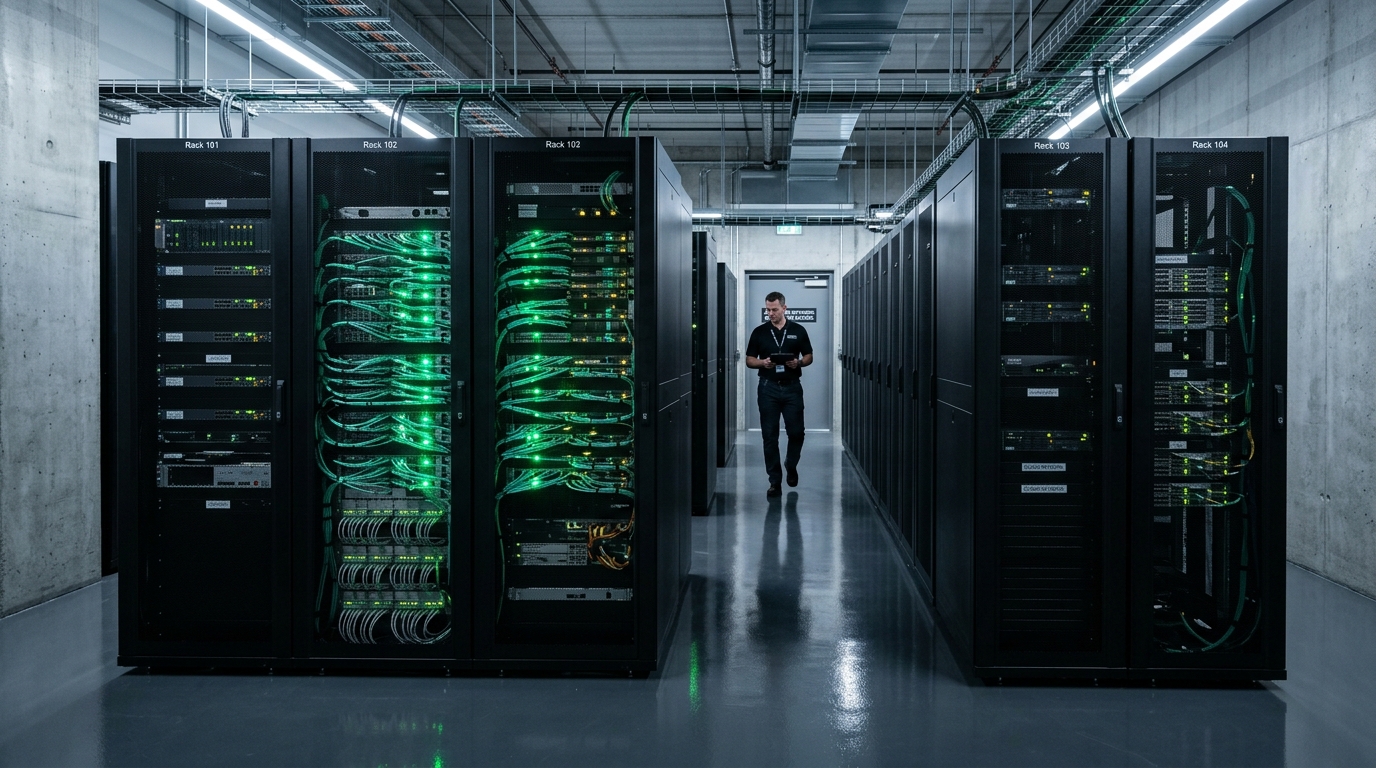
Air-Gapped Industrial Deployments: Securing Critical Telemetry with Merkle Ledgers
How unidirectional optical data diodes and cryptographic audit trees enforce zero-trust integrity in operational technology enclaves.
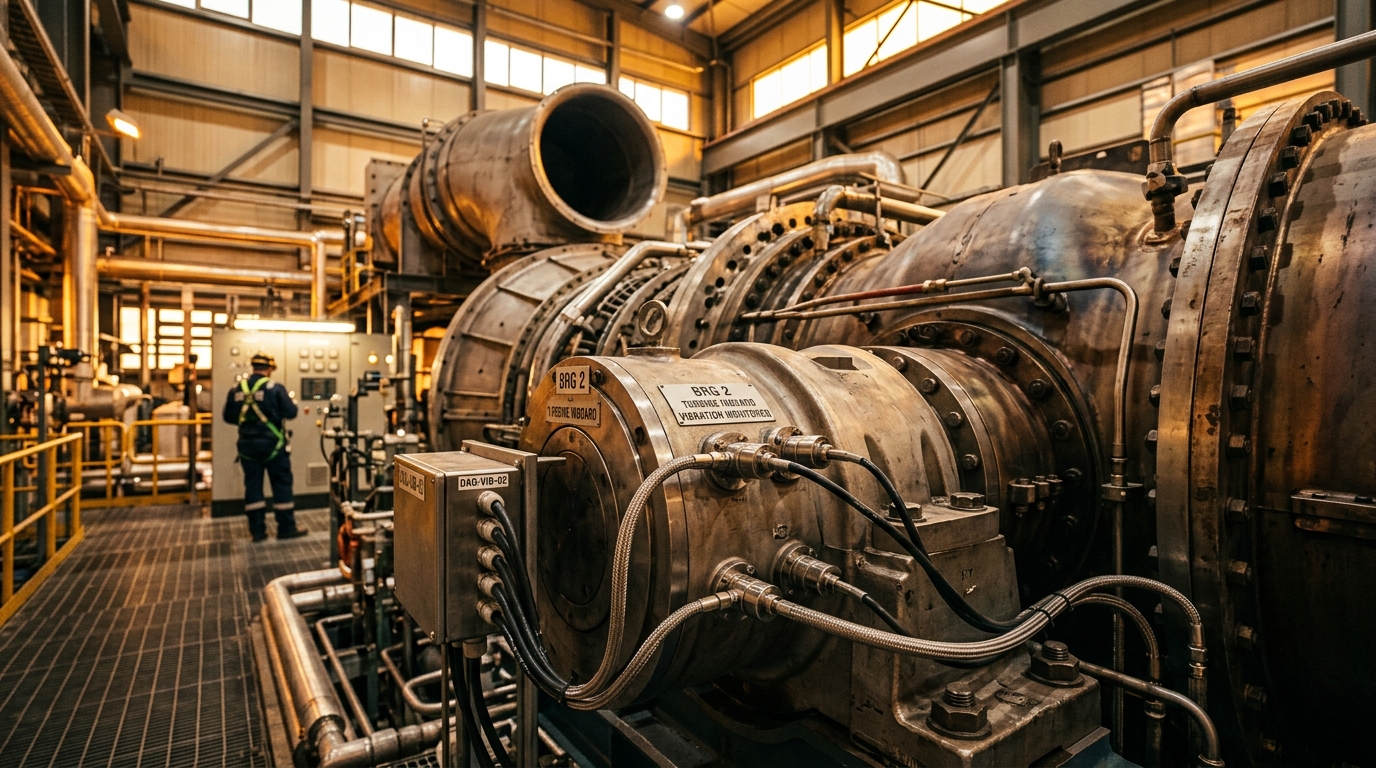
API 670 and Continuous Edge Telemetry: The Engineering Behind Turbomachinery Protection
A deep-dive analysis into eddy-current proximity probes, 2oo3 dual-voting trip circuits, and sub-millisecond edge protection architecture.
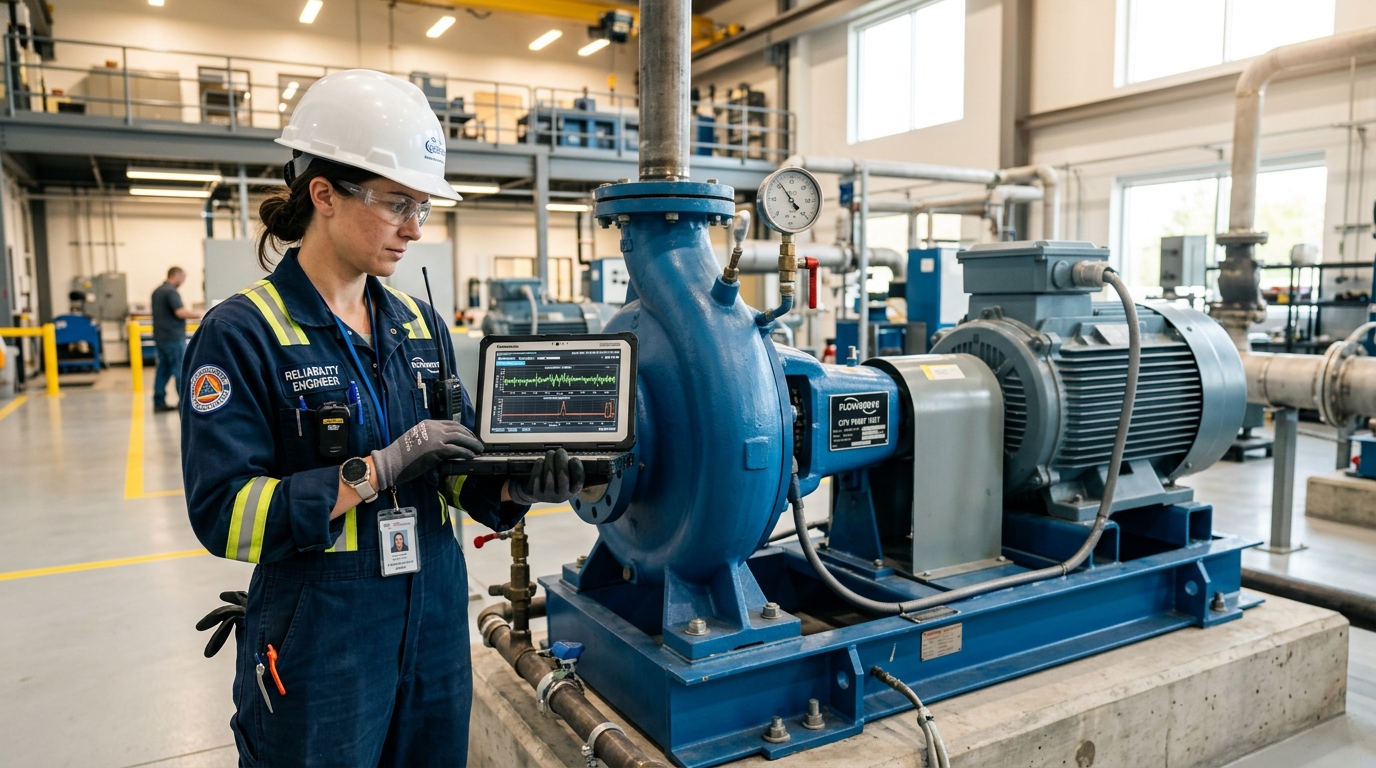
The Evolution of CMMS: From Passive Work Order Ledgers to Autonomous Asset Operating Systems
Why multi-million-dollar legacy CMMS databases decay into digital graveyards, and how autonomous agent networks automate the maintenance lifecycle.

ISO 14224: The Architecture of Industrial Reliability Taxonomy
Why unstandardized equipment hierarchies paralyze cross-facility benchmarking, and how ISO 14224 standardizes failure reporting for machine learning.
Get started
for free
Try Optruss for as long as you like with full access to autonomous agent workflows and edge telemetry. Deploy across any asset train without proprietary sensor lock-in.