
The Evolution of CMMS: From Passive Work Order Ledgers to Autonomous Asset Operating Systems
Why multi-million-dollar legacy CMMS databases decay into digital graveyards, and how autonomous agent networks automate the maintenance lifecycle.
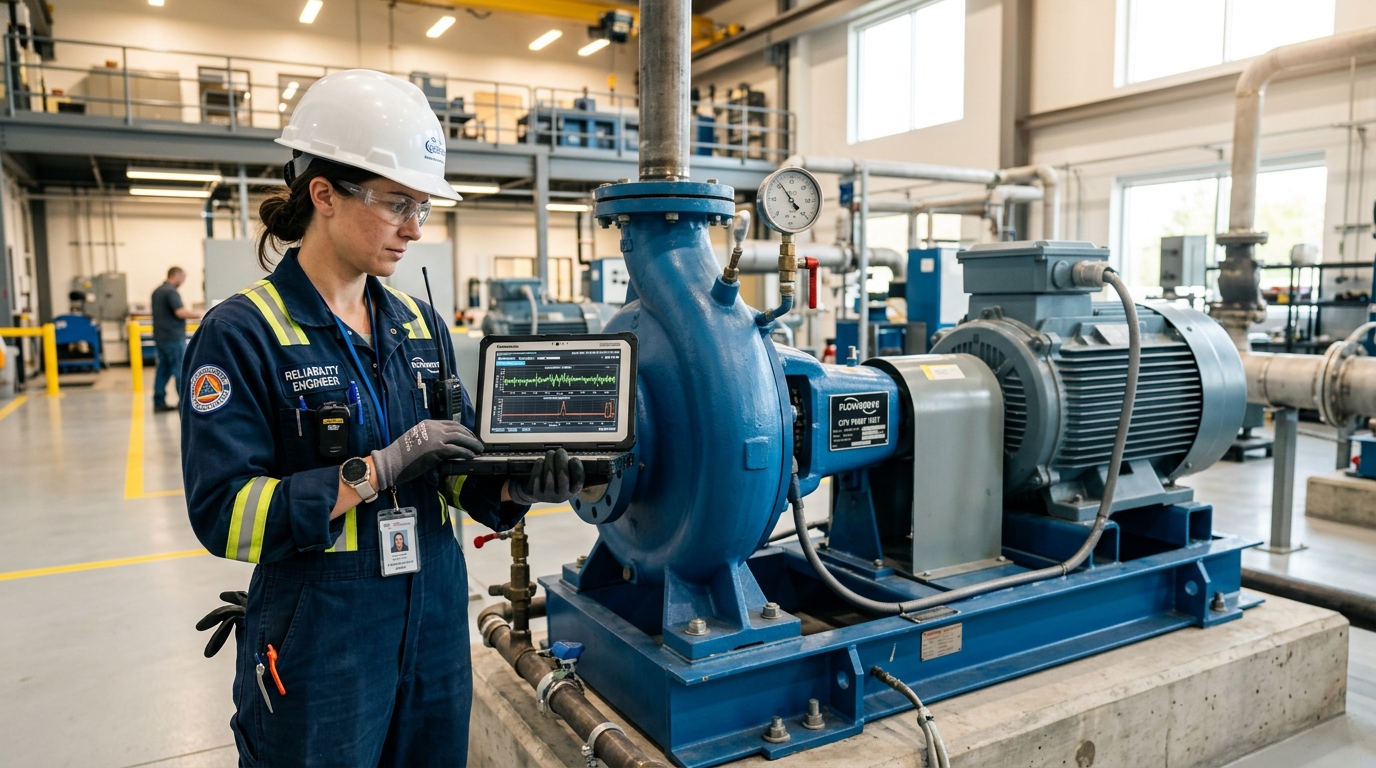
Computerized Maintenance Management Systems were designed forty years ago as passive electronic accounting ledgers for work orders and payroll. In modern industrial facilities, these systems are giving way to autonomous asset operating systems that automatically diagnose faults, schedule craftspersons, reserve parts, and verify physical repairs.
RIYADH — In the central IT headquarters of an industrial conglomerate managing sixteen processing plants across the Arabian Peninsula, a database administrator executes an audit query across the enterprise Computerized Maintenance Management System. The statistics returned by the database reveal an alarming reality: across 420,000 catalogued equipment tags, over sixty-two percent of physical maintenance work orders contain missing failure codes, forty-eight percent list inaccurate labor hours, and nearly eighty thousand open notifications languish in unreviewed backlogs dating back thirty-six months. The multi-million-dollar enterprise software suite, implemented over a five-year consulting engagement, has degenerated into what systems architects term a digital graveyard: a vast, static electronic filing cabinet filled with corrupted, inconsistent, and commercially useless administrative noise.
The structural failure of conventional CMMS platforms—exemplified by legacy relational monolithic systems deployed since the late 1980s—stems from a fundamental architectural flaw: they were engineered as passive accounting software rather than dynamic physical operating systems. Designed originally by financial controllers to track contractor billing hours, depreciable asset book values, and spare part inventory ledgers, legacy CMMS platforms treat physical rotating machinery as static accounting entities rather than dynamic thermodynamic systems governed by physical laws.
Under the conventional maintenance paradigm, every stage of the work order lifecycle is dependent on manual human friction. When an industrial slurry pump begins cavitating or a cooling tower gearbox develops a bearing defect, the machine emits physical warning telemetry for days. Yet the CMMS remains entirely inert until a plant technician physically walks past the equipment, notices audible acoustic knocking, returns to an office terminal, and manually types out a maintenance notification.
What follows is an administrative obstacle course: the notification sits in a supervisory queue for days, awaiting manual triage. A planner reviews the work order, consults paper equipment manuals to identify required spare part part-numbers, searches warehouse stock databases, drafts an isolation permit, and assigns the task to a maintenance supervisor. By the time a mechanical technician finally receives a physical printed work order and arrives at the machine skid, the initial localized bearing defect has progressed to catastrophic rotor seizure, bending the drive shaft, wrecking mechanical seals, and tripping the entire process unit.
Industry benchmark data indicates that in plants relying on passive CMMS architectures, the average latency between the first physical onset of an equipment anomaly and the physical initiation of maintenance intervention exceeds twenty-eight business days. Over eighty percent of that delay is purely bureaucratic latency: human triage, manual work order creation, approval routing, parts lookup, and permit coordination.
The vanguard of industrial asset management has declared the end of passive CMMS software, transitioning rapidly to Autonomous Asset Operating Systems built on directed asset graphs and governed multi-agent networks. In an autonomous asset operating system, machinery telemetry, maintenance execution, spare parts logistics, and process safety are unified into a single real-time operational fabric.
When edge sensors detect a high-frequency vibration spike indicating early outer-race bearing fatigue at 102.4 kHz, the physical operating system does not wait for a human to draft a notification. An autonomous reliability agent ingests the anomaly, cross-references historical failure modes under ISO 14224 taxonomy standards, and calculates the exact remaining useful life interval with Bayesian confidence bounds.
Operating within strict finite-state-machine governance guardrails, the autonomous agent orchestrates the entire maintenance lifecycle in milliseconds. It queries the storeroom inventory graph, automatically reserves the exact replacement bearing assembly and gasket kit, and checks technician scheduling databases to match the required task with a certified vibration specialist possessing active safety permits. It drafts the electronic Permit-to-Work, complete with pre-populated Lockout/Tagout isolation boundary valves derived from the plant's 3D piping and instrumentation diagram graph.
When the maintenance technician arrives at the morning shift briefing, their ruggedized mobile tablet displays a fully coordinated, staged, and parts-reserved maintenance package. Upon completion of the physical replacement, edge vibration sensors immediately verify that mechanical vibration has returned to baseline ISO limits before the autonomous agent formally closes the work order and updates the enterprise reliability ledger. By automating the bureaucratic friction of maintenance operations, autonomous asset operating systems collapse intervention latencies from twenty-eight days to twenty minutes, safeguarding capital assets and permanently burying the era of the passive digital graveyard.
The architectural lineage of industrial maintenance software reveals a persistent lag between enterprise data systems and physical factory reality. In the 1970s and 1980s, Computerized Maintenance Management Systems (CMMS) emerged as digital filing cabinets running on mainframe punch cards, designed primarily to track physical assets for financial depreciation rather than mechanical reliability. The client-server revolution of the 1990s introduced Enterprise Asset Management (EAM) platforms such as IBM Maximo and SAP Plant Maintenance (PM), establishing centralized relational databases to record work order histories, inventory transactions, and craft labor hours. Yet despite hundreds of millions of dollars in software licensing, these legacy platforms remained fundamentally passive: static repositories of retrospective human data entry that exerted zero autonomous influence over plant reliability.
The fundamental bottleneck of traditional CMMS architectures lies in the relational database model itself. Relational database management systems (RDBMS) represent industrial plants as rigid, normalized tables connected by foreign keys. In physical engineering reality, an industrial facility is not a set of disjointed tables; it is a highly dynamic, interconnected cyber-physical graph. A vibration transient on a motor drive bearing is coupled via rotor dynamics to shaft alignment, which interfaces with mechanical seal flush pressures, fluid cavitation dynamics, process stream temperatures, and upstream electrical bus voltages. Relational databases are structurally incapable of traversing these multi-hop, multi-physics dependencies in real time, forcing reliability teams to manually extract data into spreadsheets to perform post-mortem analyses.
Autonomous industrial operating systems dismantle this legacy paradigm by implementing native property graphs and event-driven agentic architectures. Rather than waiting for a human technician to notice an abnormal reading, enter a work notification, route it through supervisory approvals, and manually assign a maintenance work order weeks later, the autonomous operating system executes closed-loop reliability management in real time. Continuous edge telemetry feeds directly into the asset graph, where autonomous reliability agents continuously evaluate mechanical health against physics-guided digital twins and deterministic finite state machines.
When an autonomous agent confirms early-stage subsurface bearing spalling, it does not merely generate a passive dashboard alert. Operating under bounded programmatic governance, the system executes a coordinated sequence of autonomous operational actions: it queries the central storeroom API to verify and reserve the exact matched bearing pair and mechanical seal kit; it calculates optimal craft wrench time based on technician skill matrices and geospatial location; it automatically drafts a standardized permit-to-work dossier with pre-populated isolation valve tags; and it coordinates with plant production schedulers to insert the maintenance intervention into the upcoming operating lull.
Field audits conducted across early-adopter chemical facilities demonstrate that transitioning from static CMMS databases to autonomous operating systems increases technician wrench time from an industry-wide average of 28% up to 58%. Administrative work order processing time collapses from an average of eighteen days to less than four minutes. By replacing bureaucratic retrospective data entry with closed-loop autonomous operational intelligence, industrial operating systems are transforming maintenance from a costly corporate overhead function into an autonomous engine of competitive manufacturing advantage.
The operational loop closes with automated post-maintenance verification executed through edge telemetry. When mechanical technicians complete an overhaul and re-energize the machine, the autonomous operating system does not accept a simple manual checkbox indicating completion. Instead, edge processors monitor the first sixty minutes of rotational operation, executing baseline Fast Fourier Transforms, shaft orbit verification, and thermal equilibrium analysis. Only when the empirical vibration and temperature signatures confirm perfect alignment and lubrication according to ISO 10816 standards does the operating system formally certify the work order as closed, mathematically guaranteeing maintenance quality and eliminating premature re-failure loops.
Listen to our podcast, Read our newsletter
Join 25,000+ plant reliability and asset health engineers receiving our weekly deep dives.
Subscribe to our weekly systems engineering letter.
Select your engineering discipline to receive calibrated benchmarks and failure modes (ISO 14224).
Related articles
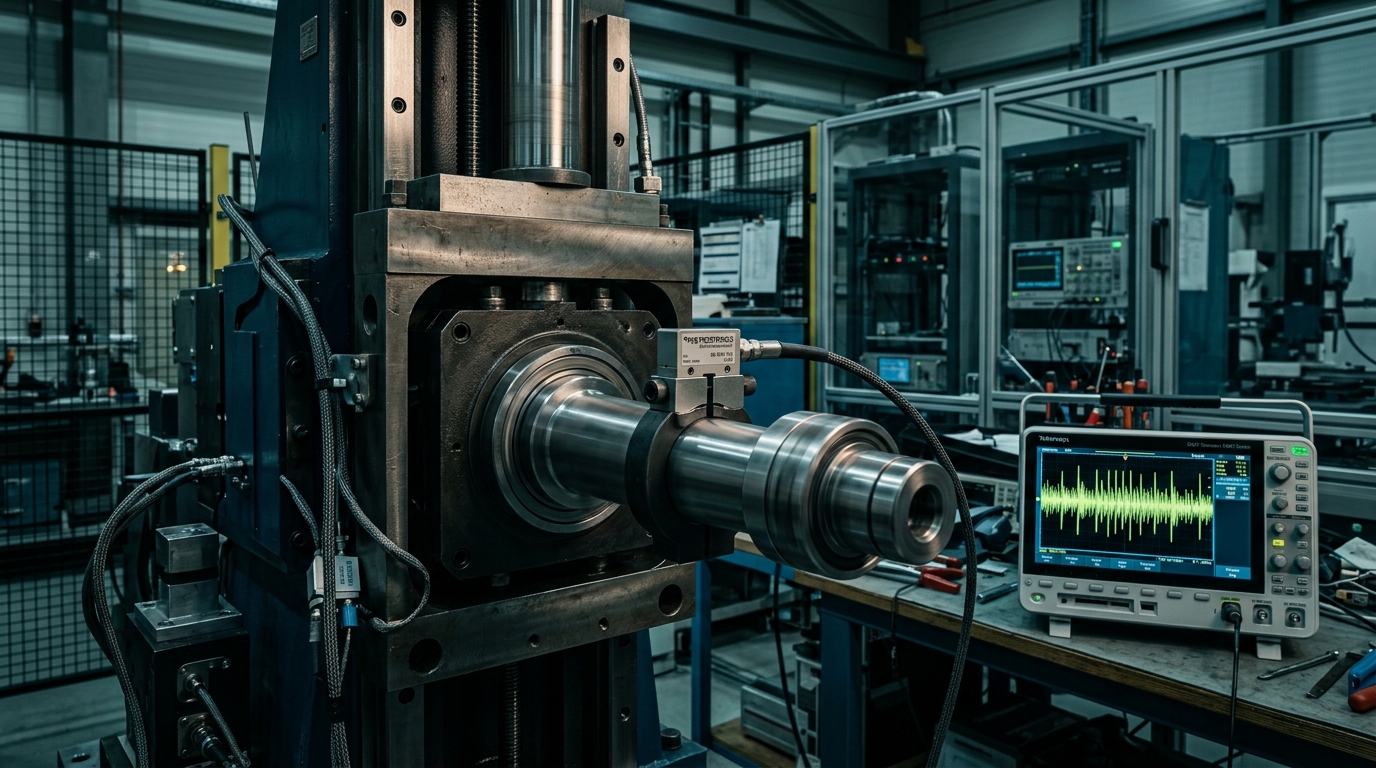
Ingestion at 102.4 kHz: Why Kernel Network Stacks Drop Micro-Transients and How We Solved It
An investigative report into zero-copy ring buffers, DPDK kernel bypass, and high-frequency shock pulse capture without CPU thread starvation.
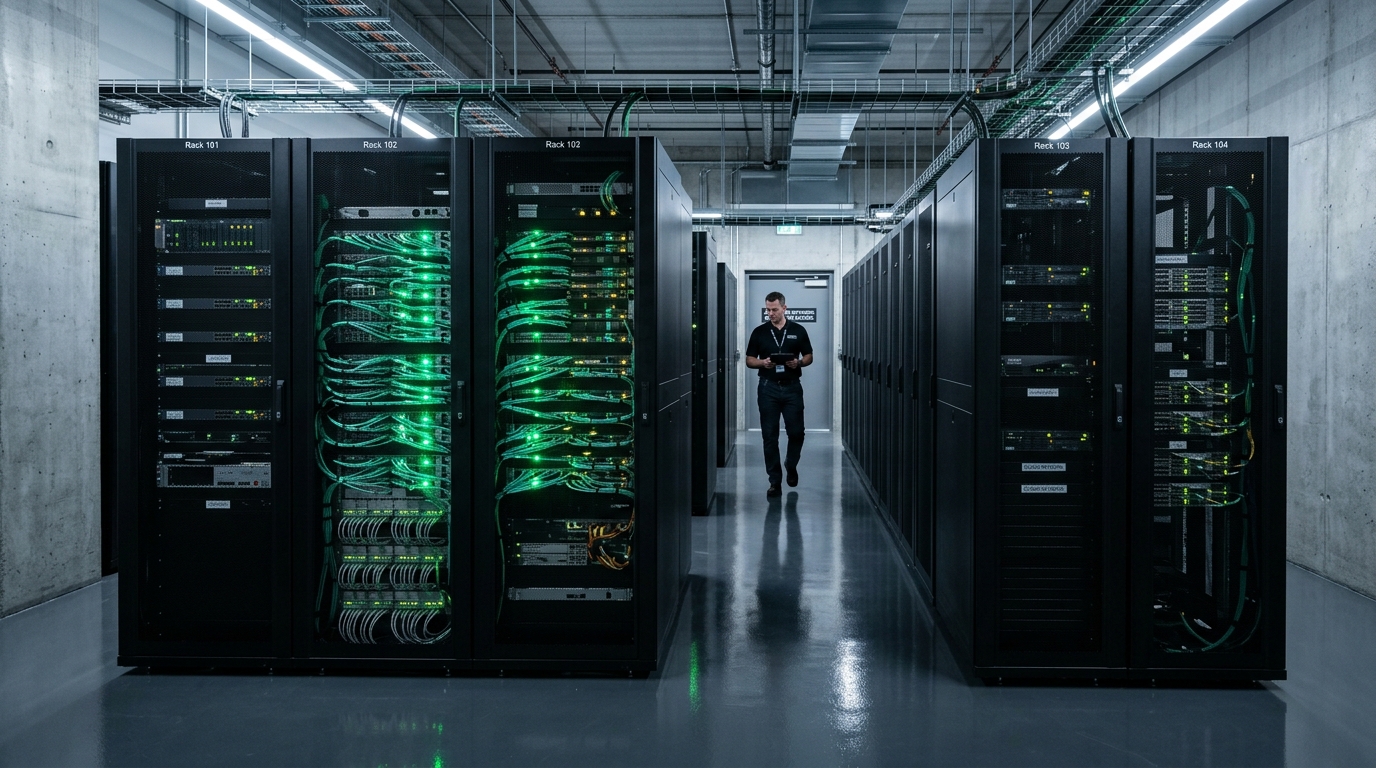
Air-Gapped Industrial Deployments: Securing Critical Telemetry with Merkle Ledgers
How unidirectional optical data diodes and cryptographic audit trees enforce zero-trust integrity in operational technology enclaves.
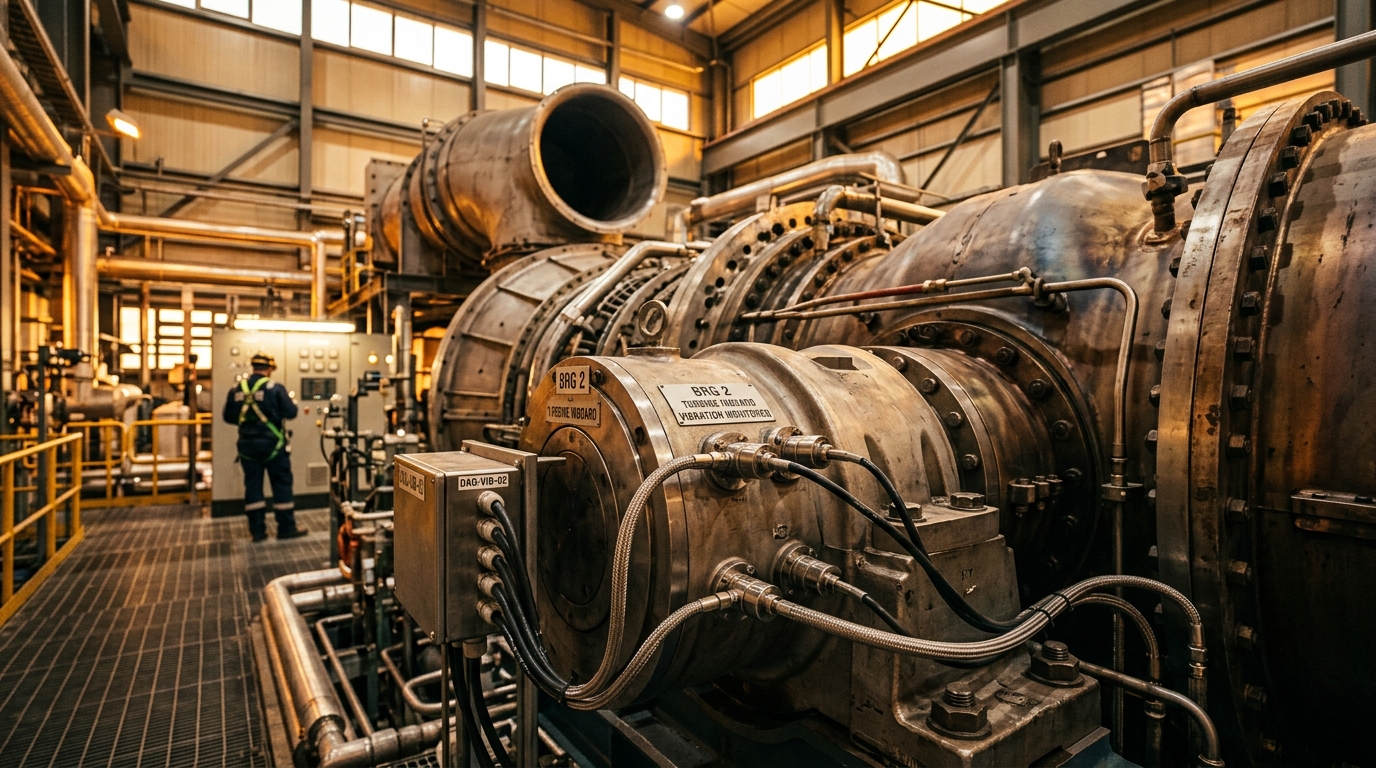
API 670 and Continuous Edge Telemetry: The Engineering Behind Turbomachinery Protection
A deep-dive analysis into eddy-current proximity probes, 2oo3 dual-voting trip circuits, and sub-millisecond edge protection architecture.
ISO 14224: The Architecture of Industrial Reliability Taxonomy
Why unstandardized equipment hierarchies paralyze cross-facility benchmarking, and how ISO 14224 standardizes failure reporting for machine learning.
Get started
for free
Try Optruss for as long as you like with full access to autonomous agent workflows and edge telemetry. Deploy across any asset train without proprietary sensor lock-in.