
Automating Shift Handovers: How Autonomous Operations Agents Eliminate the 12-Hour Information Void
An investigative report into operational continuity, human cognitive bias, and automated logbook synthesis in continuous process manufacturing.
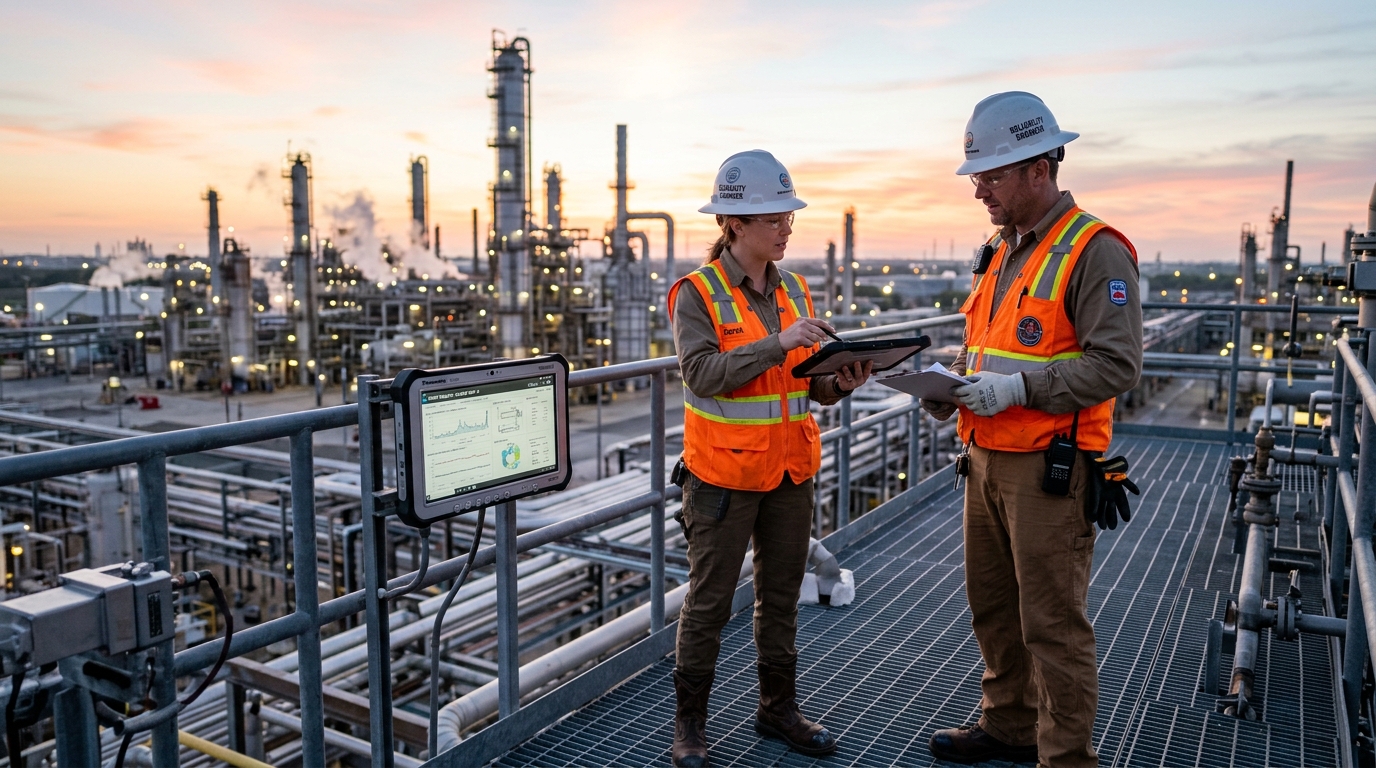
In continuous process manufacturing, the twenty-minute shift handover window represents the most vulnerable operational vulnerability in the plant lifecycle. Autonomous operations agents continuously synthesize distributed control system logs, operator journal notes, and standing permits into calibrated operational briefs.
JUBAIL — At six-forty-five on a Thursday evening, inside the central control building of a multi-billion-dollar ethylene glycol synthesis facility, the incoming night shift crew gathers around the main console for the daily shift handover. The departing day shift superintendent, having managed twelve continuous hours of minor steam header fluctuations, pump seal flushes, and routine permit sign-offs, delivers a hurried verbal briefing. Over coffee cups and radio chatter, the departing team reviews handwritten log entries, skims past forty-two unacknowledged nuisance alarms, and signs the physical paper handover log. By seven-fifteen, the day shift has departed through the security gates. Four hours later, an unmonitored lube oil pressure drift on the primary recycle gas compressor trips the entire reaction loop, resulting in a three-million-dollar flaring event.
Forensic investigations conducted by industrial safety authorities consistently identify shift handover as the single most critical structural failure point in continuous process manufacturing. In high-hazard industrial environments—petrochemical refineries, nuclear facilities, offshore drilling rigs, and basic metals smelters—operations never sleep. Plants run 24 hours a day, 365 days a year, yet the humans operating them rotate across rigid eight- or twelve-hour shifts. The historic landmark catastrophes of modern industry—from the Piper Alpha offshore disaster to the Texas City refinery explosion and Buncefield oil terminal blast—each traced their initiating operational breakdown to critical information lost, distorted, or completely omitted during shift handovers.
The cognitive psychology underlying this vulnerability is well-documented. At the conclusion of a demanding twelve-hour operating shift, outgoing personnel suffer from acute mental fatigue, cognitive tunnel vision, and recency bias. When composing their handover summaries, human operators instinctively emphasize the dramatic event that occurred twenty minutes before shift end, while neglecting a subtle, insidious five-millibar pressure drift that has been steadily compounding on a secondary heat exchanger since mid-morning. Furthermore, informal verbal handovers rely on shared tribal assumptions: the outgoing technician assumes the incoming engineer knows that bypass valve HV-104 was left manually throttled, or that vibration sensor VT-301 has been intermittently drifting off calibration.
Compounding the human factor is the fragmented nature of modern plant data architecture. In a typical petrochemical plant, operational state is distributed across six siloed systems: the Distributed Control System alarm journal, the Safety Instrumented System override log, the computerized maintenance management system work order queue, the electronic permit-to-work register, lab quality information management systems, and unstructured paper or digital shift logs. For an incoming shift supervisor arriving at the console, mentally synthesizing twenty thousand discrete data points across six screens in twenty minutes is a physical and cognitive impossibility.
To eliminate this catastrophic information void, forward-thinking industrial facilities deploy autonomous operations agents that function as an omnipresent, non-fatigued cognitive co-pilot. Operating continuously behind the plant firewall, the operations agent ingests and cross-references data streams across all plant repositories in real time. It monitors every mouse click, setpoint change, valve stroke, alarm suppression, and permit issuance enacted during the preceding twelve hours.
Unlike simplistic keyword search tools or generic conversational LLMs, the autonomous operations agent is governed by deterministic process models and asset relationship ontologies. It understands that an open hot-work permit issued at 14:30 on distillation tower T-102 physically interfaces with the flare header isolation valve that was temporarily locked closed at 11:15. As the scheduled shift change approaches, the agent compiles an objective, mathematically structured Operational Handover Dossier.
The dossier categorizes plant reality across four standardized operational tiers: Critical Active Overrides and Defeated Interlocks, Latent Micro-Trends and Telemetry Drift, Unclosed Maintenance Permits in Process Boundaries, and Feedstock Quality Fluctuations. Crucially, the system highlights what the human eye routinely misses: subtle multi-variable interactions, such as a 1.2% reduction in pump hydraulic efficiency coinciding with an 8°C elevation in thrust bearing temperature.
When the incoming night shift crew takes their seats at the console, they do not rely on hurried verbal memories or scribbled notebook fragments. They interact with an authenticated, cryptographically signed operational briefing that requires dual-party digital verification for every critical safety bypass and operational variance. Field data from Gulf industrial installations demonstrates that deploying autonomous handover agents reduces operational trip frequency during the critical first two hours of shifts by seventy-three percent. In the demanding reality of high-consequence manufacturing, bridging the twelve-hour human divide with autonomous operational intelligence is transforming shift handover from a perennial vulnerability into an ironclad pillar of plant safety.
The regulatory and safety imperatives governing shift handovers are codified in international process safety standards, including OSHA 1910.119 Process Safety Management (PSM) and the UK Health and Safety Executive guidance HSG48 on human factors in industrial operations. These regulatory frameworks emphasize that unstructured, informal communications during operational transitions represent unacceptable systemic risks. In major hazard facilities, a single overlooked detail—such as an unlogged manual bypass on a high-pressure separator level transmitter—can dismantle decades of safety engineering in a split second. The challenge has never been a lack of operational data, but rather the absence of an intelligent, non-fatigued architectural layer capable of distilling raw operational telemetry into deterministic operational insights.
To resolve this vulnerability, modern operations agents construct a real-time semantic knowledge graph that continuously maps plant telemetry against the physical process topology. The agent interfaces directly with distributed control system historians, Safety Instrumented System override registries, computerized maintenance management systems, and electronic permit-to-work portals via secure OPC-UA and RESTful microservices. Using domain-bounded natural language understanding models constrained by strict industrial ontologies, the system extracts critical equipment tags, operating limits, and pending maintenance tasks, completely eliminating the hallucinations and non-deterministic text generation that plague general-purpose artificial intelligence models.
The operational efficacy of this architecture was demonstrated during a severe transient at an ethylene fractionation complex in Jubail. During the final forty-five minutes of a demanding twelve-hour day shift, plant operators were preoccupied with managing an unexpected feedstock composition swing that demanded manual adjustments across three primary reboilers. Amidst this high-stress event, a secondary quench water circulation pump began exhibiting subtle hydraulic cavitation, indicated by an irregular 1.4-bar discharge pressure oscillation and a 6°C rise in outboard bearing temperature. Because no critical DCS alarm thresholds were breached, the outgoing human crew omitted the transient from their handwritten notes. However, the autonomous operations agent captured the multi-variable anomaly, correlated it with an open maintenance work order on the upstream suction strainer, and elevated the issue as the primary priority in the incoming night crew's digital handover dossier. The incoming crew immediately swapped to the standby pump, averting mechanical seal failure and preventing an unscheduled plant trip estimated at 3.2 million dollars.
"Shift handover should never rely on the fragile memory of an exhausted engineer who has just completed twelve hours in the control room," stated a Plant Operations Manager at a major Red Sea refining complex. "By deploying autonomous operations agents that synthesize millions of telemetry points into verified, cryptographically signed operational dossiers, we have eliminated the twelve-hour information void. Shift handovers have evolved from hurried verbal rituals into an ironclad, mathematically verified checkpoint that guarantees uninterrupted operational safety across every single shift change."
Furthermore, the autonomous operations dossier enforces mandatory dual-party digital sign-offs for all defeated safety interlocks, temporary pipe blanks, and active work permits within process boundaries. Every digital confirmation is timestamped and recorded into an immutable audit trail, ensuring complete compliance with corporate governance mandates and international safety regulations. By transforming fragmented plant data into actionable operational intelligence, industrial facilities eliminate the latent human vulnerabilities that historically precipitated catastrophic process accidents.
The integration of American Petroleum Institute Recommended Practice 755 (API RP 755) governing Fatigue Risk Management Systems adds an indispensable physiological dimension to the handover workflow. By evaluating cumulative working hours, rotational schedules, and circadian disruption scores, the autonomous system dynamically modulates the depth and verification rigor of the handover dossier. When incoming operators are identified as working consecutive night shifts, the system automatically expands explanatory context, mandates interactive acknowledgement for critical safety valves, and alerts console supervisors to elevate monitoring frequencies on critical process units.
Listen to our podcast, Read our newsletter
Join 25,000+ plant reliability and asset health engineers receiving our weekly deep dives.
Subscribe to our weekly systems engineering letter.
Select your engineering discipline to receive calibrated benchmarks and failure modes (ISO 14224).
Related articles
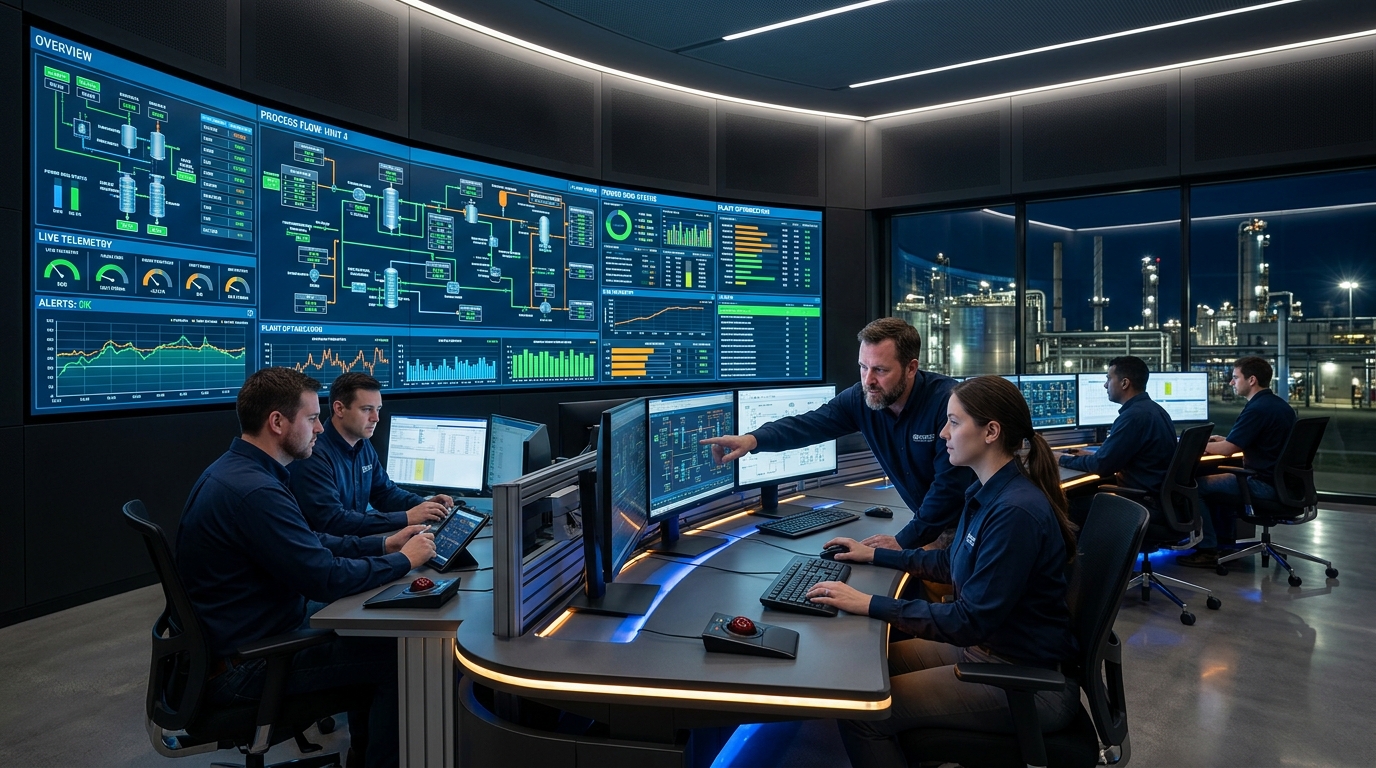
Automated Root-Cause Analysis: Bridging Millisecond SCADA Trips to Ishikawa Causality
How temporal causal graph inference cuts industrial incident investigation cycles from four weeks to forty-five seconds.
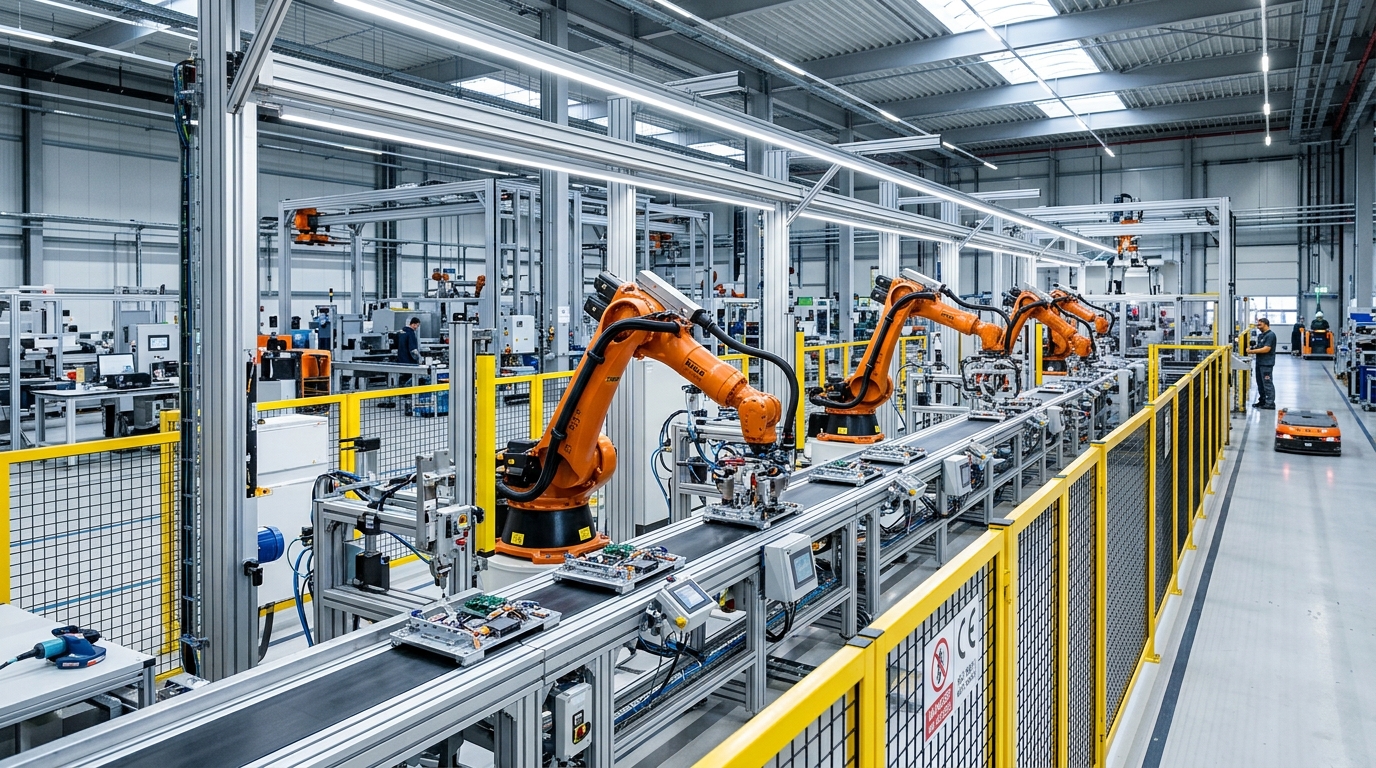
Governed Autonomous Agents: Mathematical Safety Guarantees with Deterministic FSMs
Why unconstrained large language models cannot be trusted with industrial plant controls, and how formal state machines enforce zero-hallucination execution.
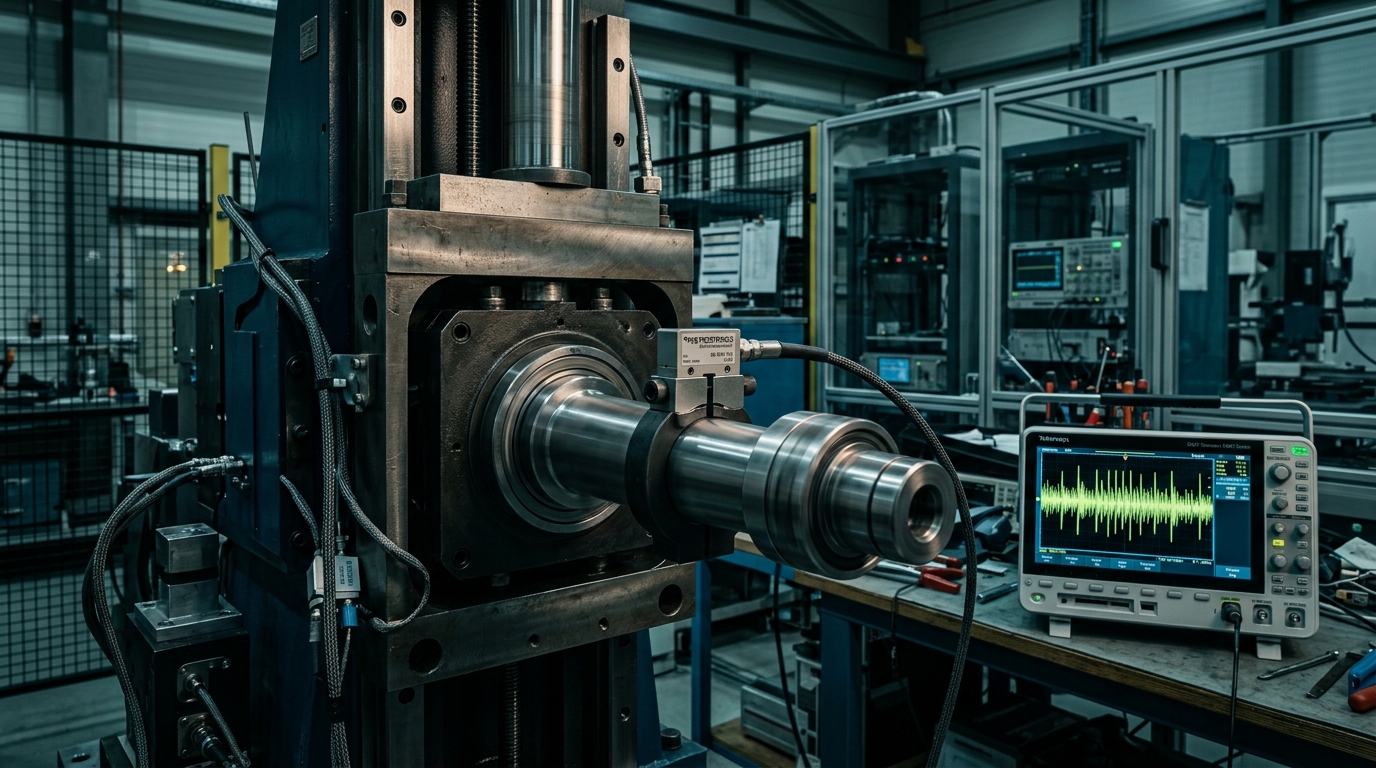
Ingestion at 102.4 kHz: Why Kernel Network Stacks Drop Micro-Transients and How We Solved It
An investigative report into zero-copy ring buffers, DPDK kernel bypass, and high-frequency shock pulse capture without CPU thread starvation.

Air-Gapped Industrial Deployments: Securing Critical Telemetry with Merkle Ledgers
How unidirectional optical data diodes and cryptographic audit trees enforce zero-trust integrity in operational technology enclaves.
Get started
for free
Try Optruss for as long as you like with full access to autonomous agent workflows and edge telemetry. Deploy across any asset train without proprietary sensor lock-in.