
Motor Current Signature Analysis: Non-Invasive Detection of Broken Rotor Bars
The electromagnetic spectral physics of detecting broken rotor bars and dynamic air-gap eccentricity from the motor control center.
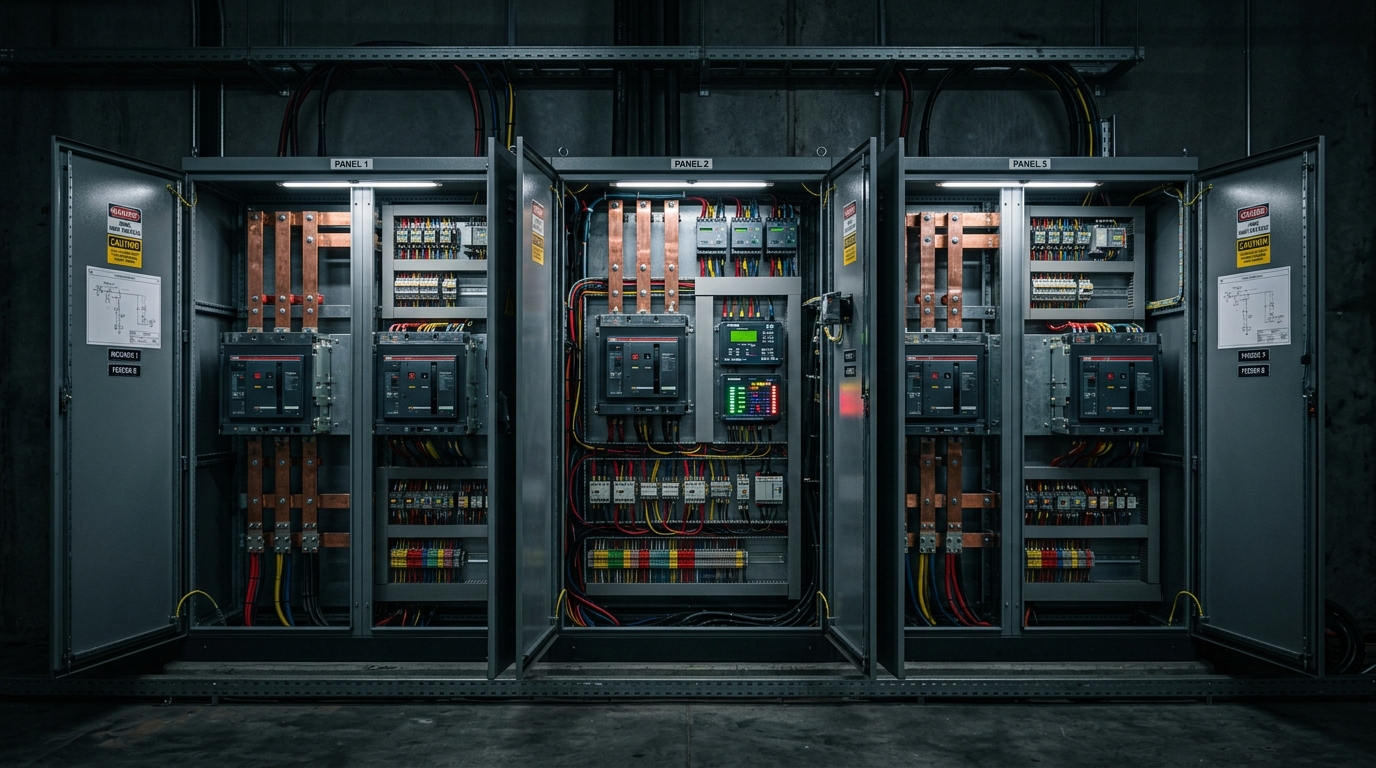
Broken rotor bars in large high-voltage induction motors generate no external casing vibration during early stages of fatigue. Motor Current Signature Analysis captures electromagnetic flux disturbances directly from Motor Control Center current transformers, isolating broken bar sidebands weeks before catastrophic rotor seizure.
RABIGH — Inside a major seawater intake pumping facility serving an integrated refining and petrochemical complex along the northern Red Sea coast, four massive 6.6-kilovolt, 4,500-horsepower squirrel-cage induction motors drive vertical turbine pumps delivering hundreds of thousands of cubic meters of cooling seawater per hour. The operational environment is severely punishing: ambient coastal humidity, aggressive airborne salinity, and heavy cyclical mechanical loads. On the drive casings of these critical machines, standard triaxial vibration accelerometers report pristine operating metrics, with overall velocities hovering below two millimeters per second. Yet inside the laminated electrical steel core of Motor Number 3's rotor, two adjacent copper-alloy rotor bars have fractured cleanly near their brazed end-ring joints.
This failure mode highlights one of the most perilous blind spots in traditional rotating machinery diagnostics: broken rotor bars in squirrel-cage induction motors produce almost zero detectable high-frequency casing vibration during early and intermediate stages of physical degradation.
A three-phase squirrel-cage induction motor operates on the principle of electromagnetic induction: three-phase alternating currents flowing through stator windings establish a rotating magnetic stator flux field spinning at synchronous speed. This rotating magnetic field induces heavy currents within the closed squirrel-cage winding of the rotor, creating an opposing rotor magnetic field that produces mechanical torque.
When a rotor bar suffers fatigue cracking—typically precipitated by heavy thermal starting transients, high residual manufacturing stresses, or mechanical bar vibration within the core slots—the broken bar can no longer conduct induced electrical current. The current that previously flowed through the damaged bar is forced to redistribute into adjacent bars, increasing their local current density by up to fifty percent.
The physical consequence is an asymmetrical electromagnetic rotor flux field. As the damaged rotor spins, the asymmetrical flux field modulates the stator magnetic field, inducing secondary counter-rotating currents back into the stator power supply lines. Crucially, because the mechanical rotor slips behind the synchronous speed of the stator magnetic field by slip factor s, this electromagnetic modulation manifests not as physical casing vibration, but as precise electrical sideband harmonics flanking the fundamental line frequency.
The diagnostic methodology that detects this electromagnetic distortion is Motor Current Signature Analysis (MCSA). Unlike vibration monitoring, which requires mounting physical sensors directly onto hazardous, high-temperature, or submerged equipment in the field, MCSA is executed entirely non-invasively hundreds of meters away inside the clean, air-conditioned environment of the electrical Motor Control Center (MCC).
By installing precision Hall-effect or Rogowski coil current transducers around the secondary windings of existing protection current transformers, edge telemetry gateways capture the raw single-phase alternating current waveform at high dynamic resolution. The signal processing engine computes a high-resolution, ultra-narrowband Fast Fourier Transform of the current signal, typically resolving spectral bins narrower than 0.01 Hz across a dynamic range exceeding one hundred decibels.
On the resulting MCSA frequency spectrum, the dominant spectral peak sits at the fundamental power line frequency, f_L (e.g., 60.00 Hz in the Kingdom of Saudi Arabia). When broken rotor bars are present, the electromagnetic slip modulation generates twin sideband peaks located precisely at the sideband frequencies: f_b = f_L * (1 ± 2s), where s is the per-unit slip of the motor.
The relative amplitude difference between the fundamental line peak and the lower sideband peak, measured in decibels (dB), provides a direct, mathematically rigorous quantification of physical rotor damage. When the motor is healthy, the sideband amplitude sits more than 60 dB below the fundamental peak (a ratio of one million to one in power). When a single rotor bar fractures, the sideband amplitude surges to 45 dB below the peak. When two or three adjacent bars break, the sideband rises to 35 dB or higher, indicating severe magnetic imbalance and impending catastrophic rotor cage disintegration.
Furthermore, advanced MCSA algorithms evaluate secondary electrical harmonics to diagnose static and dynamic air-gap eccentricity. If the rotor is physically misaligned or bowed within the stator bore, the uneven air gap alters the magnetic reluctance around the stator circumference, inducing high-frequency eccentricity harmonics at frequencies governed by the number of rotor slots and rotational speed.
Deploying continuous edge MCSA across critical high-voltage motor assets transforms electrical reliability from periodic offline testing into an automated, real-time diagnostic shield. Facilities identify cracked rotor bars months before they can physically fracture, lift out of their slots, and wipe out stator windings, saving hundreds of thousands of dollars in catastrophic rewinding costs and preventing unforced refinery shutdowns. In the rigorous domain of heavy industrial electrification, listening to the electromagnetic heartbeat of the motor current provides the ultimate standard of non-invasive operational certainty.
In heavy process manufacturing and continuous refining operations, medium- and high-voltage three-phase squirrel-cage induction motors represent the workhorses of the entire industrial infrastructure, driving high-head cooling water circulation pumps, boiler draft fans, and process compressors. While mechanical condition monitoring historically focused on bearing housing vibration, critical electromagnetic failure modes within the motor itself—specifically broken rotor bars, end-ring fractures, and dynamic air-gap eccentricity—exhibit virtually no anomalous vibration signatures in their early stages. By the time a fractured rotor bar causes localized rotor overheating, magnetic unbalance, and high radial vibration, arcing across the cracked bar has typically burned through the rotor laminations, precipitating catastrophic stator winding ground faults and uncontained motor fires.
Motor Current Signature Analysis (MCSA) resolves this diagnostic limitation by transforming the motor itself into a continuous operational transducer. The physical principles of MCSA exploit the electromagnetic interaction between the rotating rotor cage and the stationary stator windings. In an induction motor operating at slip $s = (n_s - n_r) / n_s$, current flowing through the rotor cage produces a rotating magnetic field that travels relative to the rotor at slip speed. When a rotor bar fractures, current cannot flow through the severed conductor, introducing a localized magnetic asymmetry. This rotating electromagnetic anomaly modulates the stator phase currents, producing discrete harmonic sidebands around the supply line fundamental frequency ($f_L$, typically 60 Hz in Saudi Arabia).
The characteristic broken rotor bar sidebands emerge precisely at the slip-dependent frequencies: $f_{sb} = (1 pm 2s) f_L$. The lower sideband $(1 - 2s) f_L$ represents direct electromagnetic modulation induced by the rotating electrical asymmetry, while the upper sideband $(1 + 2s) f_L$ represents the resulting mechanical torque and speed ripple feedback. To detect early-stage subsurface micro-cracks before complete bar fracture occurs, instrumentation front-ends must possess extraordinary dynamic range exceeding ninety decibels. In healthy motors, baseline spectral noise at $(1 pm 2s) f_L$ is suppressed by sixty to seventy decibels relative to the primary line current. As cracking propagates, the sideband amplitude elevates: an amplitude difference of less than forty-five decibels indicates localized bar cracking, while a difference under thirty-five decibels indicates multiple broken bars requiring immediate mechanical shutdown.
To complement MCSA and achieve absolute diagnostic certainty, advanced edge analytics incorporate the Extended Park's Vector Approach (EPVA). By transforming three-phase stator current waveforms $(i_A, i_B, i_C)$ into orthogonal two-phase spatial coordinates $(i_d, i_q)$ using Park's transformation: $i_d = sqrt{2/3} i_A - rac{1}{sqrt{6}} i_B - rac{1}{sqrt{6}} i_C$ and $i_q = rac{1}{sqrt{2}} i_B - rac{1}{sqrt{2}} i_C$, the system traces a dynamic Park's vector pattern in the complex plane. In a pristine motor, this trajectory forms a perfect circle. Stator turn-to-turn insulation degradation or inter-phase leakage deforms the circular orbit into an ellipse whose eccentricity directly quantifies the winding fault severity, providing early warning weeks before insulation breakdown causes an irreversible phase-to-ground flashover.
The preventative power of high-resolution MCSA was proven on a 6.6-kilovolt, 2,200-kilowatt seawater cooling booster motor operating in a Yanbu refining facility. Standard triaxial accelerometers mounted on the motor bearings registered pristine ISO vibration levels of 1.4 mm/s RMS. However, continuous edge MCSA revealed lower and upper sidebands at 57.6 Hz and 62.4 Hz (operating slip $s = 0.020$) exhibiting an amplitude differential of only 38.2 dB below the 60 Hz fundamental. Automated spectral peak tracking indicated that the sideband energy had escalated by 6.4 dB over fourteen operational days. Maintenance was scheduled during an upcoming planned unit decoking window. Teardown inspection confirmed two completely fractured copper rotor bars and extensive hairline cracking across four adjacent bars. By intercepting the fault prior to stator core rub, plant engineers saved a 750,000-dollar motor rewind and averted a critical cooling water shutdown that would have tripped two primary catalytic crackers.
"Vibration analysis and motor current signature analysis are non-negotiable complementary pillars of rotating machinery integrity," stated a Senior Electrical Reliability Engineer with thirty-five years of industrial experience. "Relying strictly on bearing vibration to protect induction motors is an expensive diagnostic fallacy. MCSA peers directly into the electromagnetic core of the machine, isolating broken rotor bars and dynamic eccentricity months before mechanical vibration twitches, protecting multi-megawatt electrical assets from catastrophic destruction."
Listen to our podcast, Read our newsletter
Join 25,000+ plant reliability and asset health engineers receiving our weekly deep dives.
Subscribe to our weekly systems engineering letter.
Select your engineering discipline to receive calibrated benchmarks and failure modes (ISO 14224).
Related articles
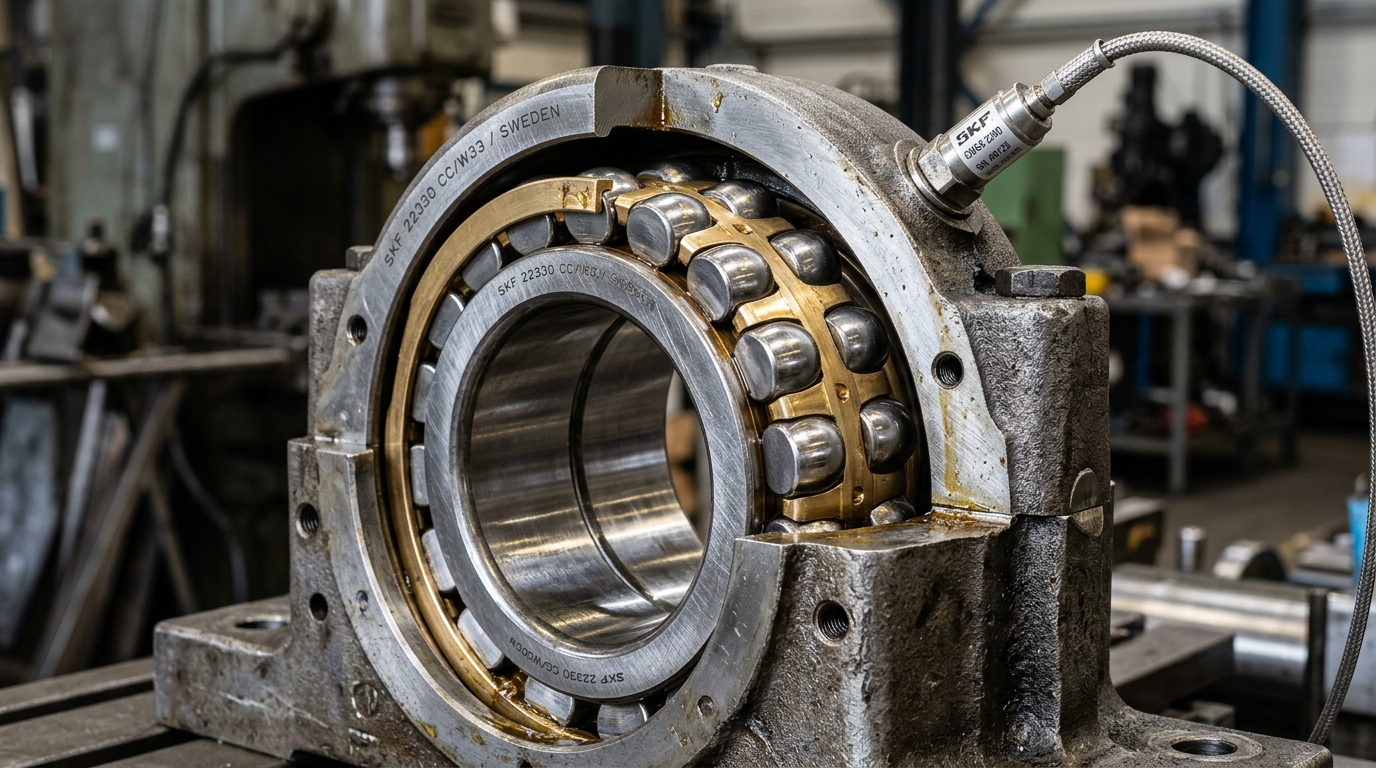
Hilbert Envelope Demodulation: Unmasking Micro-Cracks Before Vibration Alarms Fire
The mathematical physics of amplitude modulation, high-frequency structural resonance, and early bearing fault frequency isolation.
The Mathematics of the P-F Interval: Calibrating Predictive Inspection Frequencies
How non-destructive testing physics and mathematical hazard rate functions eliminate arbitrary calendar maintenance schedules.
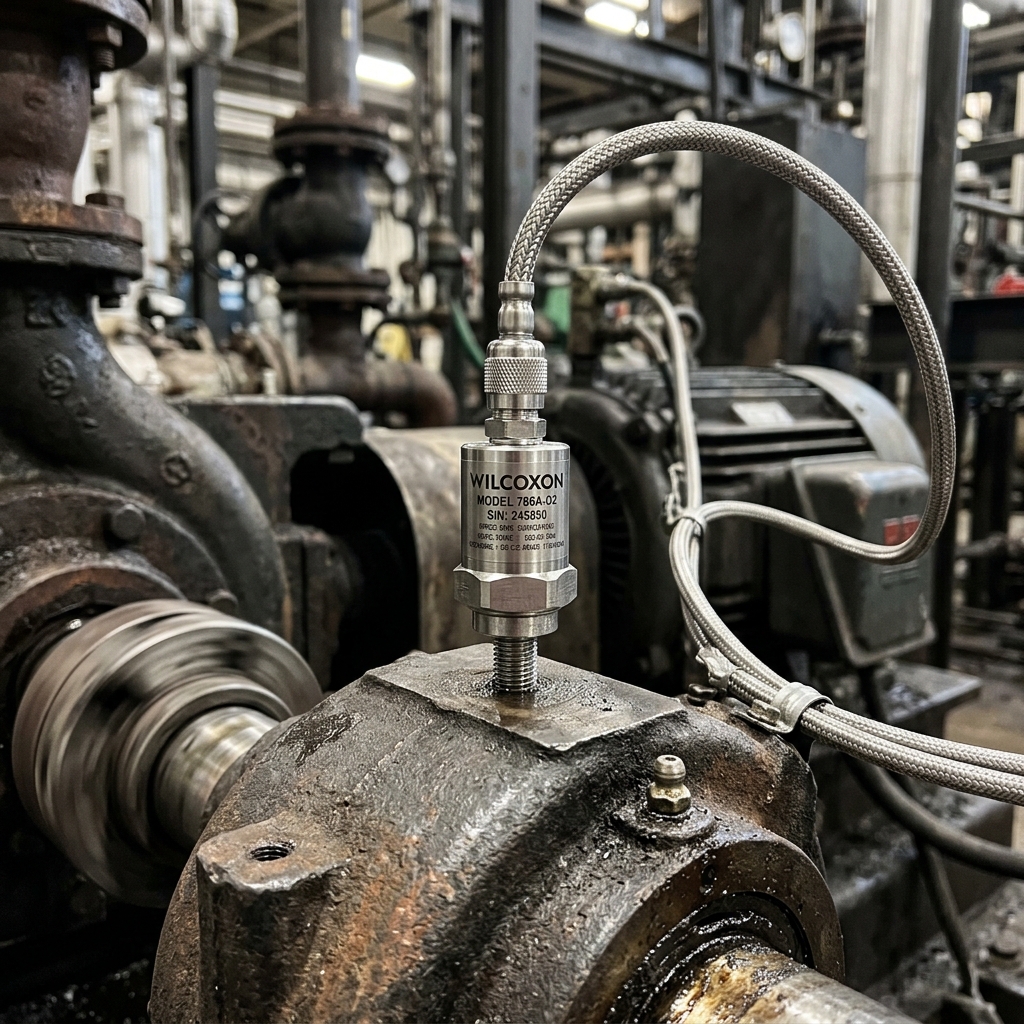
Piezoelectric vs. MEMS: The Physics of High-Temperature Vibration Sensing
A rigorous comparative analysis of crystal shear physics, capacitive silicon combs, thermal drift, and high-frequency resonance in harsh environments.

Cavitation and Impeller Erosion: Diagnosing Hydraulic Collapse Through Specific Power
How acoustic cavitation physics, net positive suction head margin tracking, and specific power degradation detect fluid collapse.
Get started
for free
Try Optruss for as long as you like with full access to autonomous agent workflows and edge telemetry. Deploy across any asset train without proprietary sensor lock-in.