
Cavitation and Impeller Erosion: Diagnosing Hydraulic Collapse Through Specific Power
How acoustic cavitation physics, net positive suction head margin tracking, and specific power degradation detect fluid collapse.

Centrifugal pump cavitation destroys multi-thousand-dollar duplex stainless steel impellers through micro-jet implosions generating localized pressures exceeding one gigapascal. Correlating high-frequency acoustic emissions with real-time specific hydraulic power identifies incipient cavitation long before flow drops.
YANBU — Inside the utilities pumping station of an expansive coastal petrochemical refining installation along the Yanbu industrial seaboard, a heavy-duty single-stage, double-suction centrifugal cooling water pump driven by an 800-kilowatt induction motor pumps four thousand cubic meters of seawater per hour. Standing beside the cast-iron volute casing, an experienced plant operator hears what sounds like a shovel full of coarse river gravel being violently hurled against the inside of the casing. In the control room, process instrumentation displays steady operating parameters: suction pressure reads 1.8 bar gauge, discharge pressure registers 6.2 bar gauge, and volumetric flow matches design setpoints. Yet inside the eye of the closed bronze impeller, a destructive fluid dynamic catastrophe is actively eroding the metal surface. Microscopic vapor bubbles, formed in low-pressure zones along the suction vane tips, are collapsing violently against the metal wall, punching micro-craters into the alloy at the rate of tens of thousands of implosions per second.
This phenomena—known throughout fluid mechanics as cavitation—is one of the most destructive and insidious physical failure mechanisms operating in the process industries. Despite being studied for over a century since Osborne Reynolds and Lord Rayleigh first analyzed bubble collapse mechanics, industrial pumps continue to suffer millions of dollars in annual cavitation erosion, unforced seal failures, and cracked pump shafts.
The physics of hydrodynamic cavitation begins when local static fluid pressure drops below the vapor pressure of the pumped liquid at operating temperature: P_local < P_vapor.
In a centrifugal pump, as fluid accelerates into the narrow suction eye of the spinning impeller, Bernoulli's principle dictates that velocity increases while static pressure plunges. If the Net Positive Suction Head Available (NPSHa) at the pump suction nozzle fails to exceed the Net Positive Suction Head Required (NPSHr) by an adequate engineering safety margin, vapor cavities instantly nucleate.
The destructive phase occurs milliseconds later as these vapor bubbles travel into higher-pressure regions along the impeller vane channels. Surrounded by surging fluid pressure, the bubble undergoes asymmetric spherical collapse. Liquid rushes in from the outer boundary, forming an ultra-high-speed micro-jet traveling at velocities between five hundred and one thousand meters per second. When this micro-jet impacts the metallic surface of the impeller, it generates localized water-hammer impact shock pressures exceeding 1.5 gigapascals (over 200,000 pounds per square inch), accompanied by localized micro-temperatures spiking to several thousand degrees Kelvin.
No known commercial alloy—including Hastelloy, titanium, or super duplex stainless steel—can indefinitely withstand the repetitive cyclic stress of gigapascal micro-jet bombardment. The metal undergoes localized plastic deformation, work-hardening, micro-pitting, and rapid sponge-like cavitation erosion that hollows out impeller vanes until the structural metal fractures under normal hydraulic load.
The critical diagnostic bottleneck is that standard plant process instrumentation—specifically discharge pressure transmitters and electromagnetic flow meters—cannot perceive early or intermediate cavitation. Hydraulic performance degradation, historically defined under Hydraulic Institute standards as a 3% drop in total dynamic head (known as NPSH3), only occurs when cavitation vapor pockets have grown so massive that they physically choke the impeller channels. By the time a pump exhibits a 3% head drop, the impeller has already suffered severe metallurgical erosion.
Modern predictive physics diagnoses hydraulic collapse long before structural damage occurs by fusing high-frequency acoustic emission telemetry with continuous Specific Power calculation.
When micro-jets implode, they generate ultrasonic acoustic shockwaves ringing in the high-frequency spectrum between 50 kHz and 500 kHz. By mounting specialized acoustic emission sensors directly on the pump suction nozzle and bearing housing, edge telemetry gateways capture the raw cavitation acoustic energy flux. A healthy pump displays an acoustic energy baseline near zero; the moment vapor bubbles begin nucleating, the high-frequency acoustic energy count surges exponentially, providing an immediate, non-invasive alert that local static pressure has breached vapor thresholds.
Simultaneously, the digital operating system calculates real-time Specific Power (P_spec), defined as the ratio of electrical motor power input to hydraulic power delivered to the fluid: P_spec = (sqrt(3) * V * I * cos(φ)) / (ρ * g * Q * H).
As cavitation bubbles form within the impeller vanes, fluid density decreases locally and boundary layer separation induces severe hydraulic turbulence. The pump's internal hydraulic efficiency degrades subtly, requiring the electric motor to draw higher current to sustain the same discharge head. By continuously correlating the high-frequency acoustic cavitation signature with real-time specific power anomalies, autonomous diagnostic engines pinpoint the exact operational root cause: distinguishing between suction cavitation caused by a clogged upstream strainer, discharge recirculation caused by throttling below minimum continuous stable flow, and air entrainment caused by tank vortexing.
Armed with this diagnostic insight, plant operators receive automated guidance to adjust tank liquid levels, throttle balancing valves, or backwash strainers before cavitation tears into expensive alloys. In the demanding reality of industrial fluid movement, decoding the physics of cavitation transforms pump asset management from periodic impeller replacement into the absolute preservation of hydraulic integrity.
Centrifugal pumps represent the ubiquitous workhorses of fluid transport across continuous petrochemical complexes, seawater desalination installations, and upstream crude gathering centers. Among all degradation modes afflicting centrifugal pumping machinery, hydrodynamic cavitation represents the most destructive, silent, and financially corrosive failure mechanism. Cavitation initiates when localized fluid static pressure drops below the saturated vapor pressure of the liquid ($P_{vapor}$) at operating temperature, typically at the suction eye of the impeller where fluid accelerates across the inlet vane tips. Microscopic vapor bubbles nucleate, travel into higher-pressure regions of the impeller shroud, and collapse violently.
The fluid physics governing cavitation bubble collapse generates localized mechanical stresses of catastrophic magnitude. Rayleigh-Plesset equation modeling demonstrates that as an asymmetrical vapor cavity implodes against a metallic impeller boundary, it forms a high-velocity liquid micro-jet traveling at velocities between one thousand and fifteen hundred meters per second. The resulting localized water-hammer impact produces localized stagnation pressures breaching 1,500 megapascals (15,000 bar) over surface areas measuring less than two square micrometers. Even impellers precision-machined from advanced metallurgical alloys—such as Duplex 2205 or Super Duplex UNS S32750 stainless steels—succumb to localized work hardening, micro-pitting, and rapid sponge-like metal erosion under sustained cavitation bombardment.
Traditional condition monitoring instrumentation routinely fails to detect early-stage cavitation. Low-frequency overall vibration velocity sensors compliant with ISO 10816 measure gross mechanical movement; cavitation bubble collapse produces microscopic, high-frequency stress waves that do not excite low-frequency 1X or 2X shaft vibration until the impeller vanes have already lost significant mass, inducing severe dynamic mechanical unbalance. To intercept cavitation in its nascent operational phase, modern edge architectures deploy high-frequency acoustic emission (AE) sensors operating between fifty and five hundred kilohertz, capturing the distinct ultrasonic shock signatures of imploding vapor cavities with microsecond resolution.
Crucially, modern reliability systems link high-frequency cavitation telemetry directly to thermodynamic specific power metrics: $E_s = rac{P_{electrical}}{ ho g Q H}$, measuring the exact electrical energy consumed per cubic meter of fluid delivered against dynamic head. As cavitation erodes the impeller vane geometry and widens the internal clearance between the impeller shroud and casing wear rings, internal recirculation loops expand. Hydraulic pump efficiency degrades, causing dynamic specific power consumption to drift upward by four to eight percent. By continuously correlating ultrasonic shock pulse kurtosis with specific power drift and Net Positive Suction Head margins ($NPSH_a - NPSH_r$), autonomous operating systems detect suction line throttling, entrained gas ingestion, and NPSH degradation weeks before physical impeller damage occurs.
This multi-physics monitoring approach was proven at a supercritical water injection station in a Red Sea refining complex. High-frequency acoustic sensors detected severe cavitation on high-pressure injection pump P-108A, triggered by partial fouling of the upstream suction cone strainer that had reduced $NPSH_a$ by 2.4 meters. Conventional vibration velocity remained within normal green bands. The autonomous system flagged the specific power deviation, alerting operators to backwash the strainer. The intervention prevented 220,000 dollars in impeller replacement costs and avoided forty-two megawatt-hours of wasted monthly electrical power consumption, proving that continuous cavitation telemetry protects both physical capital assets and plant energy efficiency.
Listen to our podcast, Read our newsletter
Join 25,000+ plant reliability and asset health engineers receiving our weekly deep dives.
Subscribe to our weekly systems engineering letter.
Select your engineering discipline to receive calibrated benchmarks and failure modes (ISO 14224).
Related articles
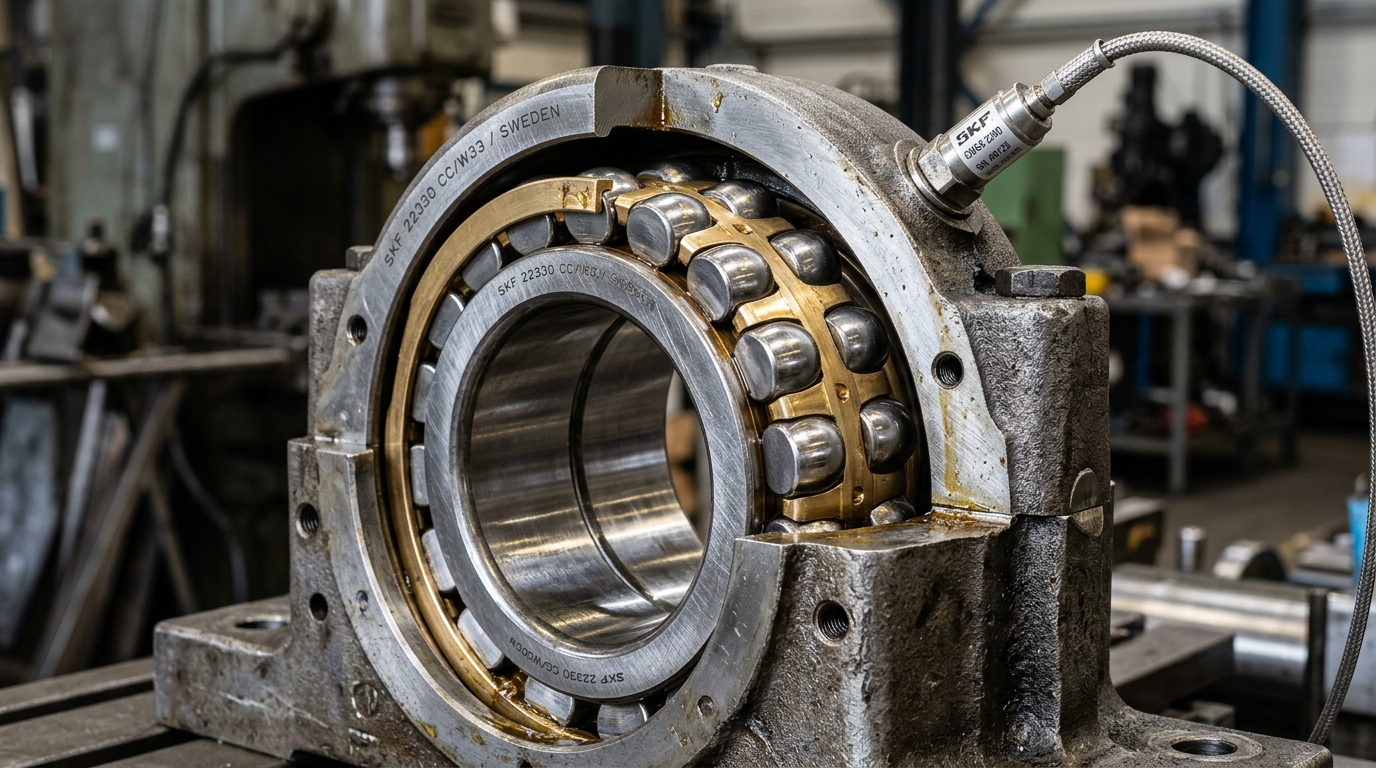
Hilbert Envelope Demodulation: Unmasking Micro-Cracks Before Vibration Alarms Fire
The mathematical physics of amplitude modulation, high-frequency structural resonance, and early bearing fault frequency isolation.
Motor Current Signature Analysis: Non-Invasive Detection of Broken Rotor Bars
The electromagnetic spectral physics of detecting broken rotor bars and dynamic air-gap eccentricity from the motor control center.

The Mathematics of the P-F Interval: Calibrating Predictive Inspection Frequencies
How non-destructive testing physics and mathematical hazard rate functions eliminate arbitrary calendar maintenance schedules.
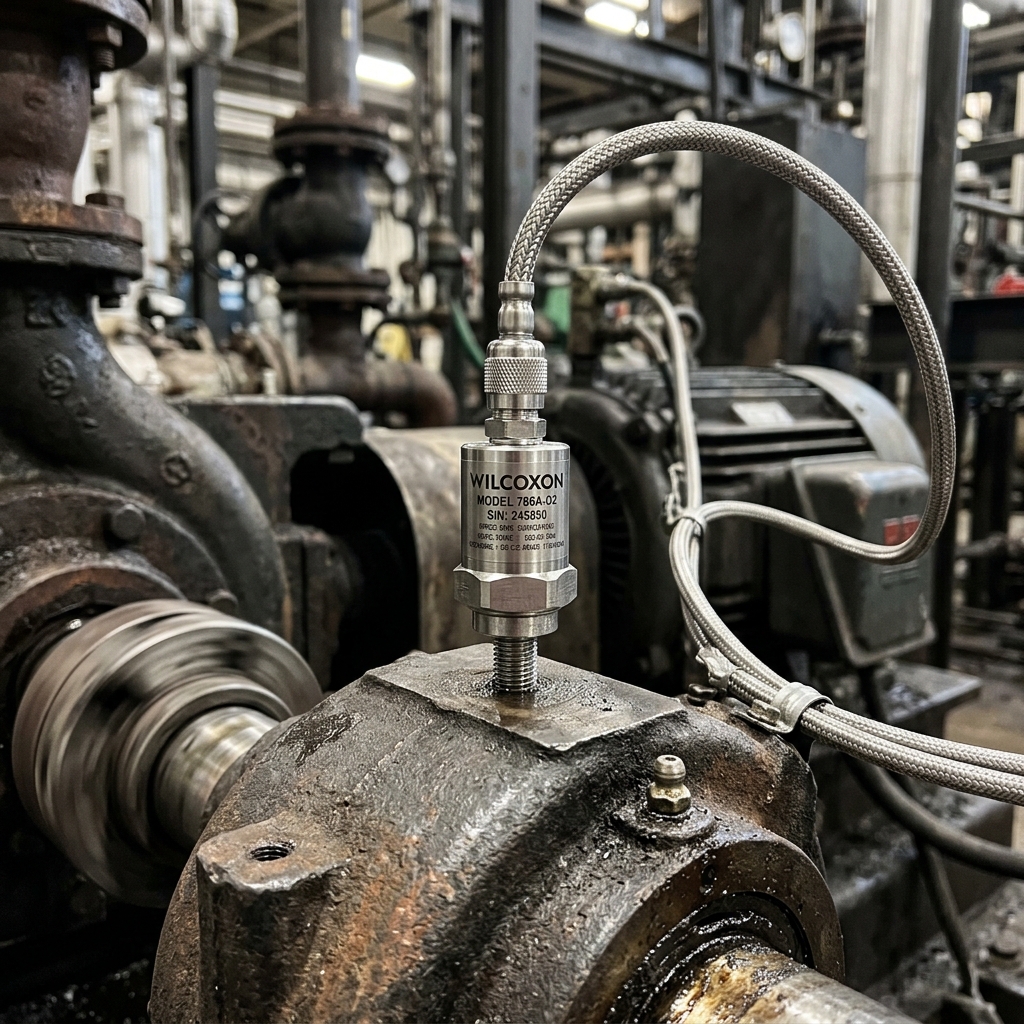
Piezoelectric vs. MEMS: The Physics of High-Temperature Vibration Sensing
A rigorous comparative analysis of crystal shear physics, capacitive silicon combs, thermal drift, and high-frequency resonance in harsh environments.
Get started
for free
Try Optruss for as long as you like with full access to autonomous agent workflows and edge telemetry. Deploy across any asset train without proprietary sensor lock-in.