Offline-First Field Mobility: Deploying CRDTs in Disconnected Industrial Plants
How state-based Conflict-Free Replicated Data Types eliminate merge collisions and guarantee data consistency across remote industrial facilities.
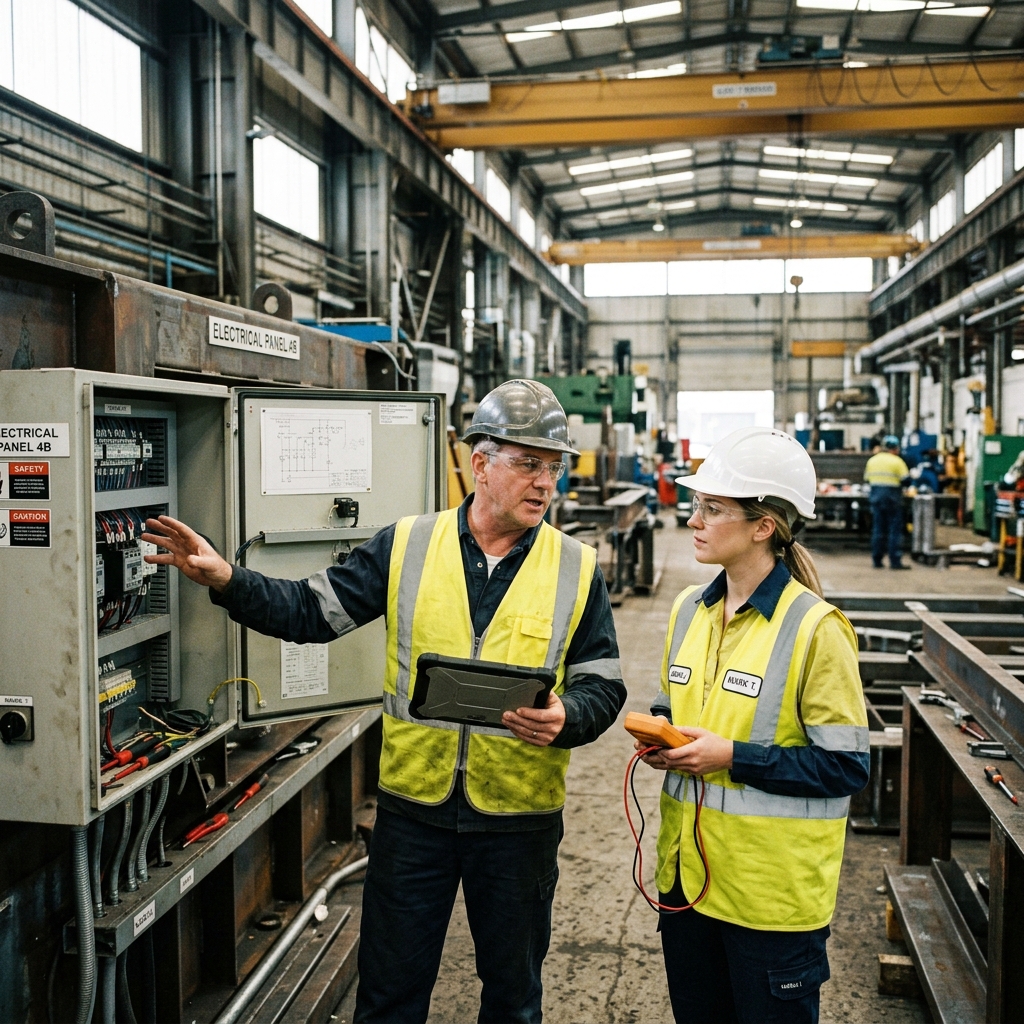
Frontline technicians in deep desert wellpads, offshore platforms, and shielded reactor buildings operate with zero network connectivity. Deploying state-based Conflict-Free Replicated Data Types on ruggedized field devices enables full offline work order editing and seamless, conflict-free synchronization upon reconnection.
SHAYBAH — Located in the heart of the Rub' al-Khali desert, eight hundred kilometers from the nearest metropolitan center, a massive natural gas liquids extraction and crude oil production complex operates amid an ocean of towering sand dunes. Here, ambient summer temperatures routinely cross fifty-two degrees Celsius, and physical infrastructure is subject to blinding dust storms. Across the sprawling desert gathering network, maintenance technicians travel hundreds of kilometers across unpaved desert tracks to service remote gas injection wellpads, custody transfer metering stations, and solar-powered cathodic protection skids. In these remote outer perimeters, cellular connectivity does not merely fluctuate; it is physically non-existent, shielded by distance, topography, and the strict RF-emission restrictions of hazardous explosive zones.
For decades, industrial enterprise software vendors promised 'mobile field solutions' that fundamentally failed the physical test of remote operations. Conventional mobile maintenance applications were designed under the flawed assumption of continuous, ubiquitous cloud connectivity. When a field technician drove into a radio-dead wellpad enclosure, the application stalled, spun loading spinners, locked user interfaces, or quietly refused to cache equipment manuals and inspection checklists.
Worse still were the disastrous data collision anomalies that occurred when mobile apps implemented crude, timestamp-based optimistic synchronization. If an electrical technician at a remote wellpad completed a hazardous area inspection and updated pump P-101's motor insulation resistance reading to 'CRITICAL: 0.5 MΩ' while offline, and simultaneously a plant planner back at the central refinery modified the same work order's scheduling priority, the central relational database resolved the conflict using the crude heuristic of Last-Write-Wins. In thousands of documented industrial incidents, the critical safety field reading was quietly overwritten and erased by an administrative schedule tweak, leaving plant management blind to a lethal electrical short-circuit.
To conquer the physical reality of zero-connectivity industrial environments, modern field engineering systems have abandoned relational database replication and adopted mathematically verified Conflict-Free Replicated Data Types (CRDTs).
Developed in distributed computing science by Marc Shapiro and colleagues, a CRDT is a specialized mathematical data structure that can be concurrently replicated and modified across multiple independent, disconnected nodes without requiring central coordination. Crucially, the mathematical properties of CRDTs guarantee that regardless of the order, latency, or network partitioning across which updates are transmitted, once all nodes have received the set of updates, they are mathematically guaranteed to converge to the exact identical state: a property known as Strong Eventual Consistency.
In an offline-first industrial asset management platform, every operational entity—a maintenance work order, an equipment inspection checklist, a Lockout/Tagout isolation log, or a vibration measurement log—is modeled as a composition of state-based (CvRDT) or operation-based (CmRDT) data structures.
For checklist completions and multi-technician inspections, the platform employs Observed-Removed Sets (OR-Sets) and Positive-Negative Counters (PN-Counters). When a mechanical technician in an isolated compressor bunker ticks off a bearing flush verification, the mutation is recorded as a cryptographically signed operational tuple containing a unique cryptographic UUID and a monotonic vector clock timestamp.
Simultaneously, for text fields such as technician diagnostic observations or handover notes, the system implements sequence CRDTs like YATA or Fugue. If two technicians editing the same work order offline add conflicting notes regarding valve packing leakage, the CRDT does not force a clunky manual merge modal, nor does it arbitrarily discard one technician's entry. Instead, the mathematical merge function weaves the concurrent text modifications into an immutable, conflict-free collaborative stream, preserving both observations with precise attribution and causal ordering.
The underlying synchronization mechanism relies on mathematical semi-lattices. The state of the distributed asset ledger forms a bounded join-semilattice equipped with a partial order relation and a least upper bound (join) operator that is strictly commutative (A ⊔ B = B ⊔ A), associative ((A ⊔ B) ⊔ C = A ⊔ (B ⊔ C)), and idempotent (A ⊔ A = A).
When a field technician returns from a three-day desert mission and their ruggedized tablet reconnects to the plant Wi-Fi network at the staging base, the device executes a peer-to-peer lattice join. Because the merge operator is idempotent, network drops, packet retries, and out-of-order deliveries have zero corrupting effect on data integrity. Within seconds, hundreds of offline inspection logs, calibrated vibration waveforms, and safety permit sign-offs merge seamlessly into the enterprise asset graph without a single conflict error or lost byte.
By grounding field mobility in the uncompromising mathematical guarantees of CRDTs, industrial enterprises operating across the world's most remote and hostile terrains bridge the digital divide. Field technicians are armed with an unshakable mobile platform that operates with absolute responsiveness in deep desert dunes, offshore production decks, and subterranean tunnels, ensuring that critical asset health intelligence captured at the physical edge is never lost to the void.
The operational landscape of heavy industrial manufacturing presents the most unforgiving networking environment on earth. Inside petrochemical distillation column skirts, high-pressure gas compressor enclosures, underground pipe galleries, and offshore production platform lower decks, physical physics actively defeats wireless connectivity. Heavy steel structural beams, reinforced concrete blast walls, and thick steel process vessels attenuate RF signals, creating complete dead zones for cellular 5G and industrial Wi-Fi networks. Furthermore, in hazardous areas classified under ATEX and IECEx Zone 1 directives where flammable gas mixtures may be present under normal operating conditions, field technicians must operate using certified intrinsically safe, hermetically sealed mobile tablets that cannot rely on continuous external power or high-gain antennas.
When industrial software vendors attempt to deploy traditional cloud-first or web-based mobile applications in these environments, the operational architecture collapses. Web applications that require synchronous API calls fail completely the moment a mechanic steps beneath a distillation column skirt. Naive offline caching architectures that rely on crude "last-write-wins" (LWW) conflict resolution introduce catastrophic data loss: if an operations supervisor in the control room updates a valve tag to "Locked Closed" while a field mechanic offline marks the same valve as "Throttled 20% Open," a last-write-wins synchronization algorithm silently overwrites the critical safety status based on arbitrary network reconnection timestamps, directly compromising process safety.
To achieve true zero-data-loss field reliability, modern industrial mobility architectures implement Conflict-Free Replicated Data Types (CRDTs). Grounded in abstract algebra and semilattice theory, CRDTs guarantee Strong Eventual Consistency across distributed nodes without requiring central coordination or continuous network connectivity. Whether structured as State-based (CvRDTs) or Operation-based (CmRDTs), concurrent modifications executed by disconnected technicians converge deterministically to the exact same mathematical state once devices exchange update deltas.
In an industrial CRDT architecture, work orders, component inspection logs, and valve isolation checklists are represented as Observed-Remove Sets (OR-Sets) and Multi-Value Registers (MVRs) stored in local SQLite databases directly on the technician's ruggedized tablet. When concurrent offline edits occur, the CRDT does not guess or overwrite; it preserves both conflicting observations within a mathematically verified semilattice join operation ($sqcup$). If an operational conflict impacts a safety-critical attribute, the join operation automatically flags the anomaly as an authenticated supervisory divergence, mandating formal dual-party verification before committing the final state to the central enterprise graph.
To bridge extended disconnections in isolated wellheads and offshore satellite platforms, the mobile architecture incorporates opportunistic peer-to-peer Bluetooth Low Energy (BLE) mesh synchronization. When two technicians cross paths on an elevated catwalk or within an unnetworked compressor shelter, their intrinsically safe tablets automatically discover each other and execute encrypted delta synchronization without human intervention. Operational updates propagate through the technician mesh like a gossip protocol, ensuring that maintenance execution records reach the central facility gateway hours before the technicians physically return to the maintenance base.
This offline-first architecture was deployed across 450 certified field maintenance technicians in an Eastern Province natural gas processing plant. Over twelve months of continuous operation across explosive Zone 1 process units, the platform processed over 140,000 mobile work transactions with zero data loss, zero dropped permit records, and zero synchronization lockouts. Mechanics execute vibration verifications, record ultrasonic leak measurements, and attach high-resolution thermographic images deep within steel column structures with zero network latency, while background synchronization protocols merge cryptographic deltas via intermittent Bluetooth mesh and dock syncs the instant connectivity is restored.
Listen to our podcast, Read our newsletter
Join 25,000+ plant reliability and asset health engineers receiving our weekly deep dives.
Subscribe to our weekly systems engineering letter.
Select your engineering discipline to receive calibrated benchmarks and failure modes (ISO 14224).
Related articles
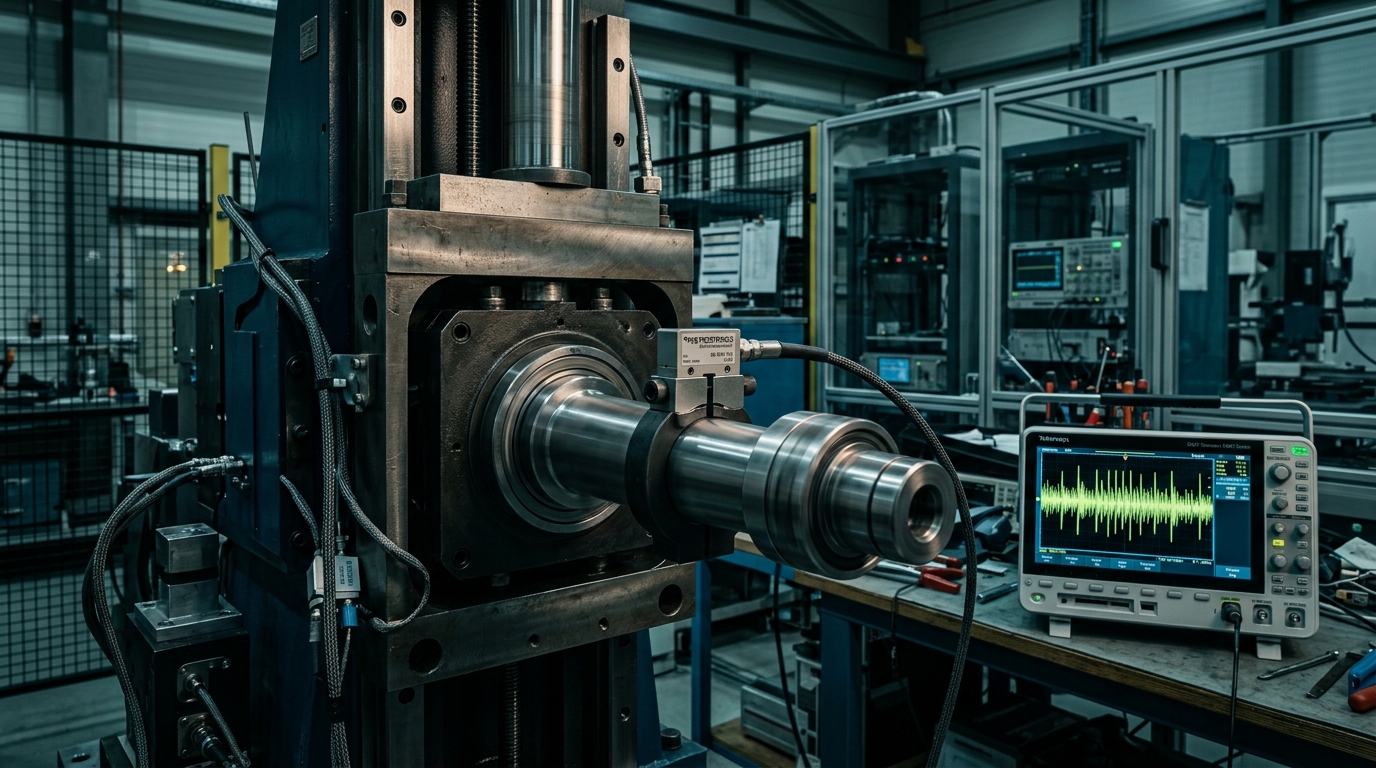
Ingestion at 102.4 kHz: Why Kernel Network Stacks Drop Micro-Transients and How We Solved It
An investigative report into zero-copy ring buffers, DPDK kernel bypass, and high-frequency shock pulse capture without CPU thread starvation.
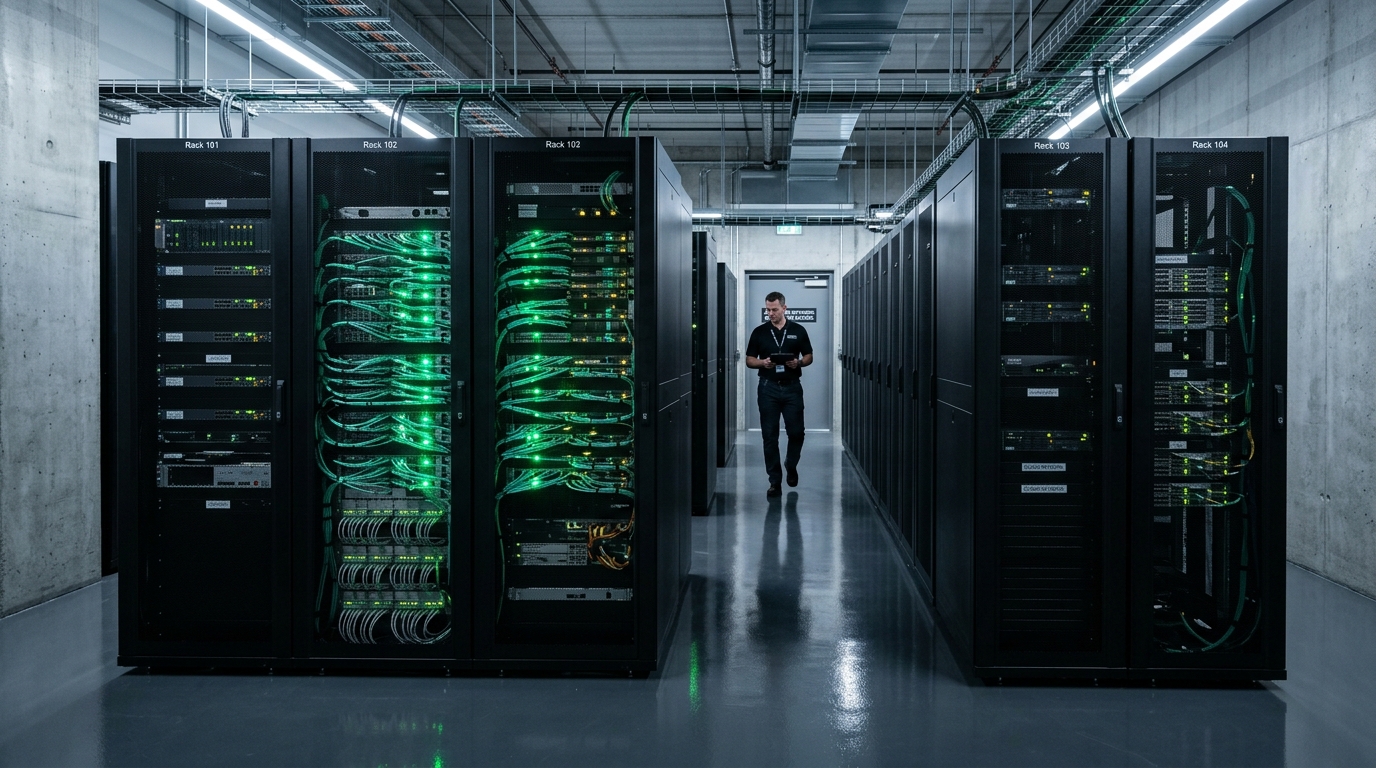
Air-Gapped Industrial Deployments: Securing Critical Telemetry with Merkle Ledgers
How unidirectional optical data diodes and cryptographic audit trees enforce zero-trust integrity in operational technology enclaves.
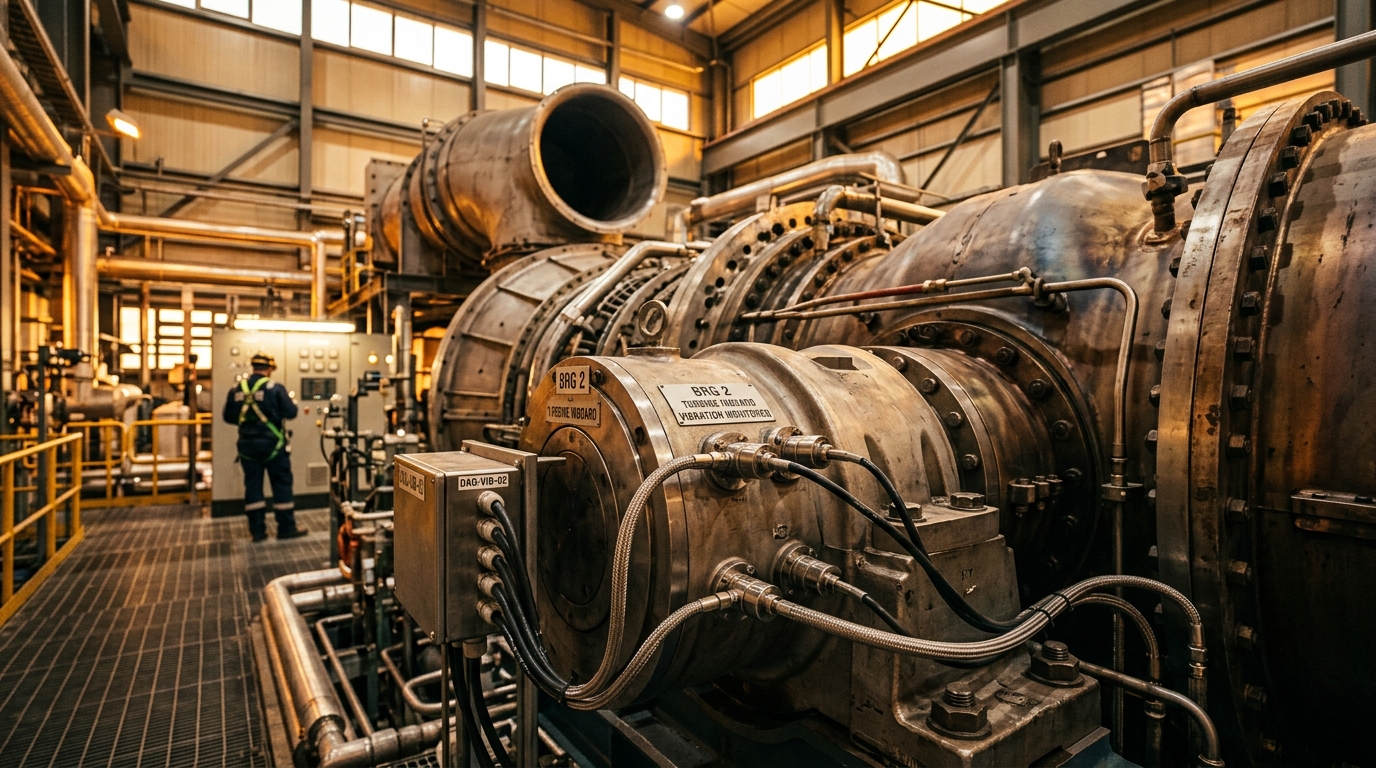
API 670 and Continuous Edge Telemetry: The Engineering Behind Turbomachinery Protection
A deep-dive analysis into eddy-current proximity probes, 2oo3 dual-voting trip circuits, and sub-millisecond edge protection architecture.
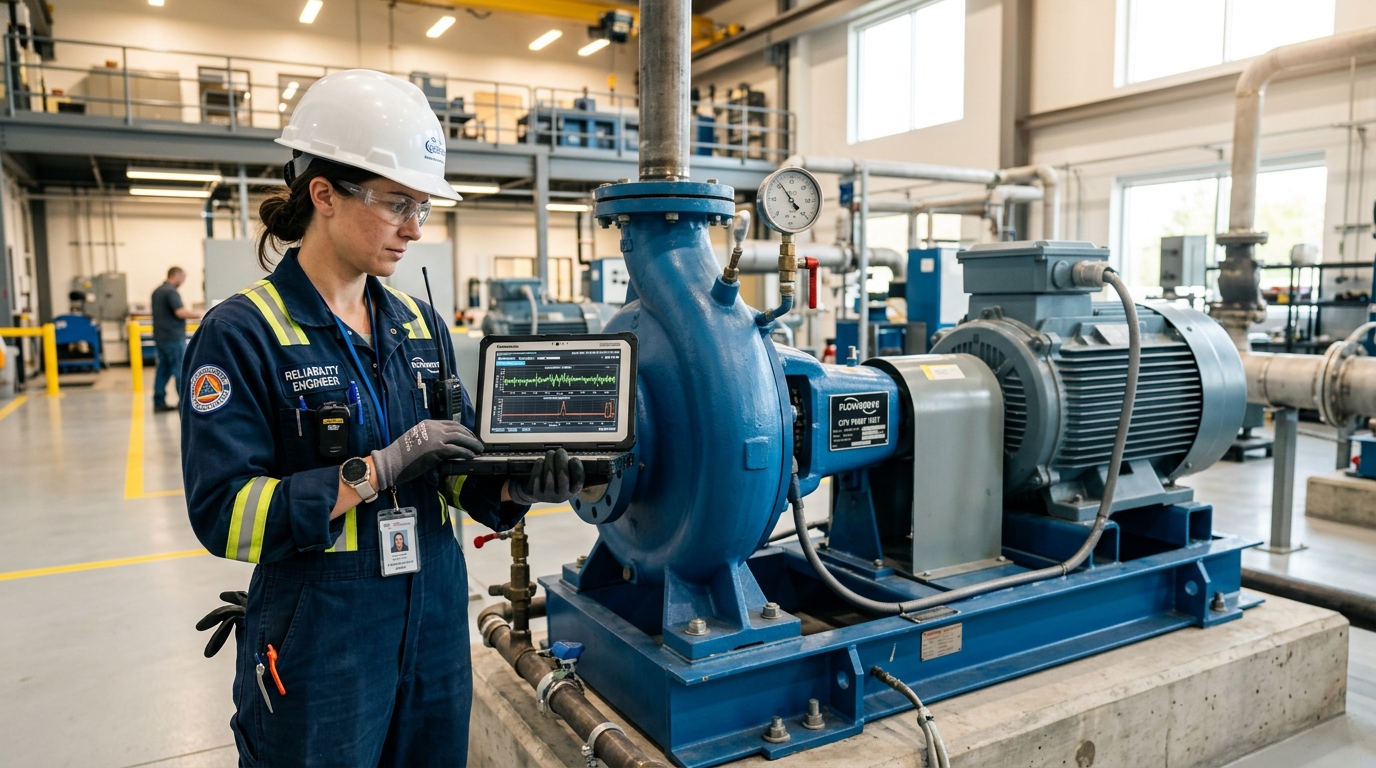
The Evolution of CMMS: From Passive Work Order Ledgers to Autonomous Asset Operating Systems
Why multi-million-dollar legacy CMMS databases decay into digital graveyards, and how autonomous agent networks automate the maintenance lifecycle.
Get started
for free
Try Optruss for as long as you like with full access to autonomous agent workflows and edge telemetry. Deploy across any asset train without proprietary sensor lock-in.