
Escaping Pilot Purgatory: Architectural Foundations for Fleet-Scale Predictive Maintenance
Why eighty-five percent of industrial IoT pilots fail to scale across enterprise plant fleets, and how open edge architectures break vendor lock-in.
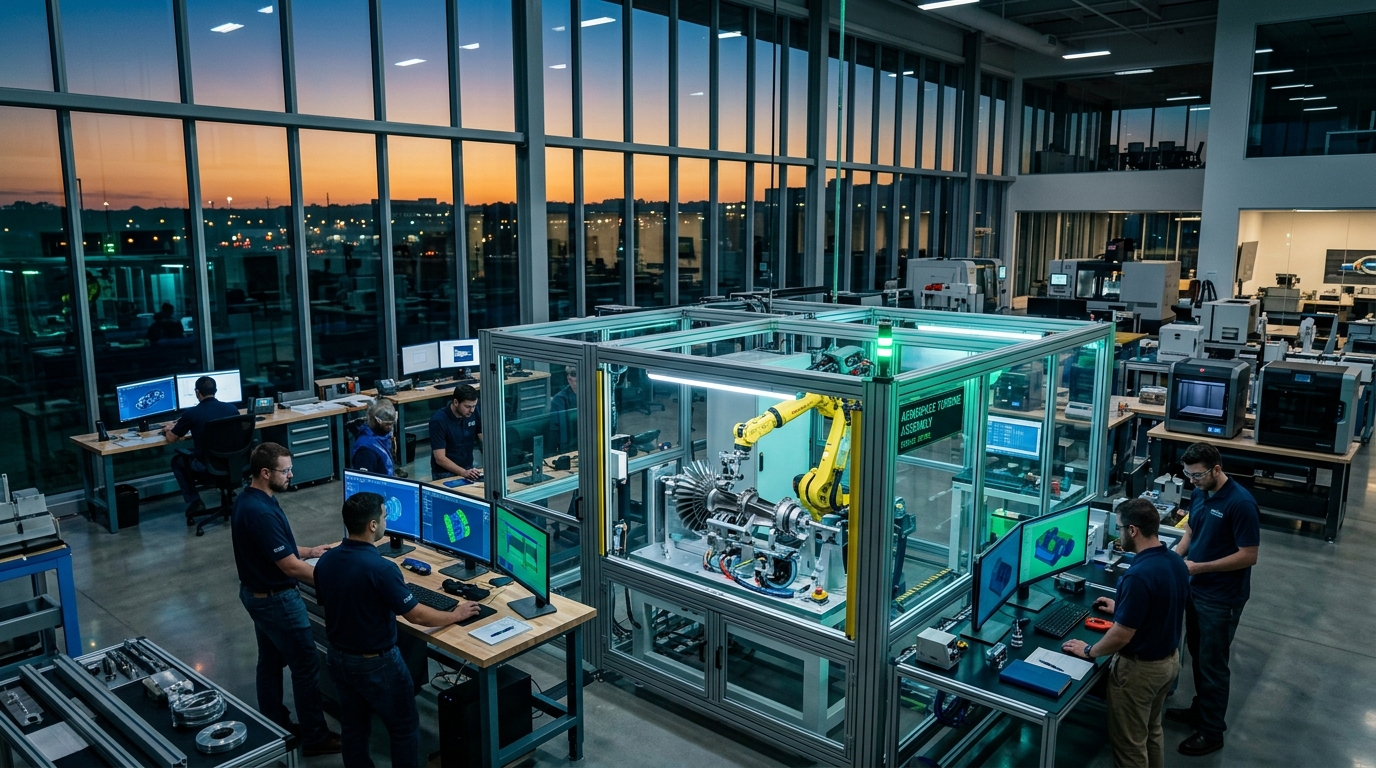
Global industrial enterprises routinely achieve stellar results on isolated fifty-sensor predictive maintenance pilots, only to watch deployments stall when scaling across tens of thousands of machinery assets. Decoupling sensor hardware from analytical pipelines via open edge protocols breaks the pilot purgatory trap.
RIYADH — In the executive boardroom of a sovereign industrial holding company supervising petrochemical crackers, fertilizer complexes, and mining refineries, a corporate vice president of manufacturing reviews an internal innovation report. Three years prior, the enterprise funded twelve distinct 'Industry 4.0' predictive maintenance pilot projects across eight subsidiary plants. The executive summaries of those initial pilots were universally triumphant: vendor-provided vibration sensors installed on thirty pumps in a pilot utility bay achieved a ninety-four percent accuracy rating in predicting motor bearing anomalies, winning corporate innovation accolades and executive praise. Yet three years later, across the holding company's fleet of more than eighty thousand rotating equipment trains, fewer than three percent of physical assets are connected to continuous diagnostic telemetry. The initiative has succumbed to the most pervasive organizational syndrome in contemporary industrial technology: Pilot Purgatory.
Empirical studies conducted by global industrial research institutes reveal that Pilot Purgatory is an industry-wide crisis: between eighty and eighty-five percent of industrial Internet of Things (IIoT) and predictive maintenance deployments never scale beyond their initial proof-of-concept boundary. Enterprises spend millions of dollars running perpetual, localized science experiments that demonstrate technical feasibility in controlled, single-bay environments, but prove utterly incapable of scaling into enterprise-wide operating systems.
The root cause of Pilot Purgatory is rarely a failure of sensor physics or machine learning algorithms; it is a structural failure of system architecture, created by proprietary vendor lock-in and fragmented data silos.
In the typical pilot deployment, an industrial facility contracts with a turnkey IIoT hardware vendor. The vendor installs proprietary wireless vibration sensors that communicate exclusively via proprietary radio mesh protocols to a proprietary edge receiver. That receiver packages the data and transmits it across a cellular gateway directly into the vendor's proprietary cloud platform.
In a small fifty-sensor pilot, this closed, vertically integrated stack appears seamless and attractive. When enterprise leadership decides to scale the solution across twenty thousand pumps, compressors, turbines, and fin-fans across five industrial cities, the closed architecture implodes under its own financial and technical constraints.
First is the financial trap of proprietary subscription models: paying recurring annual per-sensor software licensing fees for tens of thousands of assets creates an unsustainable operational expenditure run rate that erodes maintenance budgets.
Second is the sensor hardware lock-in trap: no single sensor vendor manufactures the optimal instrument for every physical asset in a complex plant. A wireless battery-powered triaxial MEMS puck that operates adequately on an ambient cooling tower fan cannot survive the 200°C temperatures of a hot asphalt pump, nor can it provide the 102.4 kHz high-frequency sampling required for a critical synthesis gas turbocompressor. Yet proprietary cloud platforms routinely refuse to ingest third-party sensors or hardwired DCS 4-20mA process variables, forcing facilities to deploy multiple competing hardware silos.
Third is operational fragmentation: control room operators and maintenance engineers find themselves confronted with six different vendor dashboards, each displaying isolated alerts that fail to integrate with the plant's central Computerized Maintenance Management System, safety permit workflows, or enterprise asset graphs.
To escape Pilot Purgatory and achieve fleet-scale operational reliability, leading industrial organizations enforce an uncompromising architectural doctrine: Decoupled Open Edge Architecture.
Under this open paradigm, the physical sensing layer, the edge compute layer, and the analytical intelligence layer are strictly decoupled using open, non-proprietary industrial standards.
At the physical sensing tier, facilities deploy open-standard sensors—whether standard IEPE piezoelectric accelerometers, 4-20mA transmitters, Modbus-RTU transmitters, or open WirelessHART nodes. The sensors interface with modular, field-hardened industrial edge gateways operating open-source Linux kernels and standardized communication protocols such as MQTT with Sparkplug B payloads, OPC-UA PubSub, and ZeroMQ.
The edge gateway performs local feature extraction, filtering, and deterministic governance right at the machine skid, eliminating the bandwidth bottleneck of streaming terabytes of raw data over public networks. Clean, calibrated engineering metrics—RMS velocity, peak acceleration, crest factor, and extracted spectral harmonics—are published to an enterprise-wide event broker.
From this open event broker, the telemetry hydrates an enterprise directed asset graph structured strictly under ISO 14224 taxonomy standards. Autonomous reliability agents query the asset graph, executing multi-variable anomaly detection that correlates high-frequency vibration with operational DCS process tags (suction pressure, fluid temperature, motor current, and valve positions).
Deployments across fleet-scale energy and petrochemical complexes prove that an open, decoupled architecture reduces enterprise rollout costs by fifty-eight percent compared to proprietary turnkey alternatives, while accelerating deployment velocity by a factor of four. By liberating industrial data from proprietary hardware silos and anchoring predictive maintenance in open, fleet-wide architectural standards, vanguard enterprises break free from Pilot Purgatory, transforming predictive maintenance from an isolated pilot experiment into the permanent, sovereign operating foundation of industrial excellence.
Across the global enterprise landscape of heavy manufacturing, industrial digitization initiatives confront an excruciating empirical reality known as "pilot purgatory." Independent industry analyses conducted by McKinsey & Company and the World Economic Forum reveal that more than seventy-five percent of predictive maintenance and Industrial Internet of Things (IIoT) pilot programs fail to scale across multi-facility operating fleets. A typical industrial enterprise successfully instruments twenty critical machines in a single high-profile unit, demonstrates impressive early anomaly detection over an isolated six-month proof-of-concept, and then stalls indefinitely when executive leadership attempts to deploy the architecture across four thousand machines distributed over five geographically dispersed operating sites.
The root cause of pilot purgatory is structural, residing in the fragmented, non-scalable computing architectures chosen for initial demonstrations. Most commercial condition monitoring pilots rely on turnkey, proprietary vendor stacks: closed proprietary vibration sensors transmitting data over proprietary wireless mesh protocols to a single vendor's proprietary cloud analytics platform. While this turnkey approach minimizes upfront setup effort for a twenty-sensor pilot, scaling it across thousands of assets creates catastrophic operational friction. Industrial enterprises confront exorbitant vendor cloud egress costs, brittle point-to-point software integrations, and a proliferation of disjointed vendor dashboards that control room operators flatly reject.
Escaping pilot purgatory demands an open, modular enterprise architectural blueprint founded on standard industrial protocols and decoupled edge compute layers. Physical data acquisition must be strictly separated from diagnostic analytics. In modern enterprise deployments, multi-vendor sensor hardware interfaces with industrial edge gateways via open, standardized protocols including MQTT with Sparkplug B payloads, OPC-Unified Architecture (OPC-UA), and High-Performance Kafka event streams. Gateways execute containerized microservices deployed and orchestrated via Kubernetes at the edge, enabling reliability teams to push updated signal processing algorithms and neural network models across five thousand edge gateways in seconds using automated CI/CD pipelines.
Equally vital is organizational architecture. Predictive maintenance cannot succeed as an isolated software initiative operated by external data science contractors. Vanguard industrial enterprises establish centralized Reliability Operations Centers (ROCs) staffed by certified rotating machinery diagnostic engineers. The ROC serves as an intelligence hub, monitoring normalized asset health indices across multiple sites, conducting root-cause reviews, and benchmarking cross-facility component performance. Crucially, autonomous integration bridges the ROC directly into enterprise CMMS systems, ensuring that validated predictive insights translate automatically into scheduled field work orders without manual email handoffs or bureaucratic committee delays.
This architectural and organizational transformation was executed across a national chemical manufacturing consortium operating four integrated complexes in Jubail, Yanbu, and Rabigh. Transitioning from twenty disjointed vendor pilots into a unified open edge architecture, the consortium scaled from 45 monitored machines to over 4,800 tagged rotating assets in eighteen months. Unplanned machinery downtime dropped by thirty-two percent enterprise-wide, spare parts inventory carrying costs decreased by eighteen million dollars, and verified production uptime savings exceeded thirty-four million dollars within the first full year of fleet-wide deployment, delivering full capital amortization in less than five months.
Listen to our podcast, Read our newsletter
Join 25,000+ plant reliability and asset health engineers receiving our weekly deep dives.
Subscribe to our weekly systems engineering letter.
Select your engineering discipline to receive calibrated benchmarks and failure modes (ISO 14224).
Related articles

Migrating Legacy Maximo to Directed Asset Graphs in 14 Days
A field report on zero-downtime ETL pipelines, preserving twenty years of historical work orders, and breaking free from monolithic relational tables.
Ingestion at 102.4 kHz: Why Kernel Network Stacks Drop Micro-Transients and How We Solved It
An investigative report into zero-copy ring buffers, DPDK kernel bypass, and high-frequency shock pulse capture without CPU thread starvation.

Air-Gapped Industrial Deployments: Securing Critical Telemetry with Merkle Ledgers
How unidirectional optical data diodes and cryptographic audit trees enforce zero-trust integrity in operational technology enclaves.
API 670 and Continuous Edge Telemetry: The Engineering Behind Turbomachinery Protection
A deep-dive analysis into eddy-current proximity probes, 2oo3 dual-voting trip circuits, and sub-millisecond edge protection architecture.
Get started
for free
Try Optruss for as long as you like with full access to autonomous agent workflows and edge telemetry. Deploy across any asset train without proprietary sensor lock-in.